How Dark Pools Protect Institutional Investors While Quietly Leaving Regular Traders Behind is not just a headline-friendly accusation; it is a market-structure problem with measurable effects. In U.S. equities, a meaningful share of trading now happens away from lit exchanges, where quotes are visible to everyone. That hidden layer changes who sees size, who absorbs impact, and who gets the cleanest execution.
The debate is not about secrecy alone. It is about institutional volume, fragmented liquidity, and whether public prices still reflect the market’s full information set. Once you follow the order flow, the imbalance becomes harder to ignore.
What Dark Pools Actually Are
How Dark Pools Protect Institutional Investors While Quietly Leaving Regular Traders Behind begins with a simple fact: dark pools are private trading venues where orders match away from public exchanges. They are usually run by broker-dealers or alternative trading systems, or ATS platforms.
Unlike lit markets, these venues do not display full order books to the public. Large orders can sit in the system without advertising size, which helps institutions avoid telegraphing intent. That is the basic mechanics of hidden liquidity.
The logic is straightforward. When a pension fund needs to buy millions of shares, showing that interest on a public tape can move the price before the trade is complete. In that setting, How Dark Pools Protect Institutional Investors While Quietly Leaving Regular Traders Behind is less a slogan than a description of execution design.
In practice, the venue matches buyers and sellers internally, often using reference prices from public exchanges. The key attraction is market impact control. A large order can be executed incrementally without triggering the kind of visible pressure that distorts price.
We have seen this structure create a split market experience: one where institutions access concealed liquidity, while everyone else infers price from a thinner public feed. That asymmetry is the foundation for everything that follows.
Why Institutions Prefer Them

For asset managers, hedge funds, pension funds, and large broker-dealers, the appeal starts with execution quality. A dark venue can reduce slippage, especially when a trade is too large for a single displayed quote to absorb cleanly.
How Dark Pools Protect Institutional Investors While Quietly Leaving Regular Traders Behind also helps reduce signaling risk. If a buy program leaks into the open market, counterparties may step ahead of it. That is where size becomes a strategic liability rather than an advantage.
Institutions care about anonymity because order visibility can be expensive. A public bid for size may invite algorithmic market manipulation from faster participants who detect the imbalance and trade around it. Hidden routing limits that exposure.
- Reduced slippage: Large orders can execute with less price movement against the trader.
- Lower signaling risk: Order intent is less visible to predatory or opportunistic counterparties.
- Better block-trade handling: Big positions can cross without flooding the lit market.
That preference is not irrational. It is structural. When fiduciaries are judged on implementation shortfall, not just whether they were “right” on direction, they naturally pursue venues that preserve execution quality.
How Dark Pools Protect Institutional Investors While Quietly Leaving Regular Traders Behind is therefore embedded in the economics of agency trading. The bigger the order, the more valuable discretion becomes.
How Price Discovery Gets Distorted
Price discovery depends on visible participation. When large slices of institutional volume migrate off-exchange, public quotes can lose some of their informational value. The market still prints prices, but not always the most informative ones.
That is where the concern sharpens. How Dark Pools Protect Institutional Investors While Quietly Leaving Regular Traders Behind can weaken the signal embedded in displayed bids and offers. If the real buying interest never reaches the tape, lit prices may understate demand.
The effect is rarely dramatic in isolation. But in aggregate, dark execution can widen the gap between the public quote and the true clearing level. Bid-ask spreads may appear tighter than the underlying supply-demand balance actually warrants, especially during stressed sessions.
There is also the latency problem. Public markets update in milliseconds, yet hidden liquidity can change state without broad visibility. That creates opportunities for shadow trading strategies that infer where dark interest likely sits and react before slower participants can adjust.
In our tests of market microstructure behavior, the issue was not morality; it was information flow. If the market sees less of the order book, the price becomes a weaker translator of capital intent.
How Dark Pools Protect Institutional Investors While Quietly Leaving Regular Traders Behind matters here because it changes the quality of the public signal, not just the venue of execution.
For background on venue-level fragmentation and speed advantages, see front-running dynamics and the SEC’s own framework on market transparency at SEC market structure.
Why Retail Traders Lose Edge
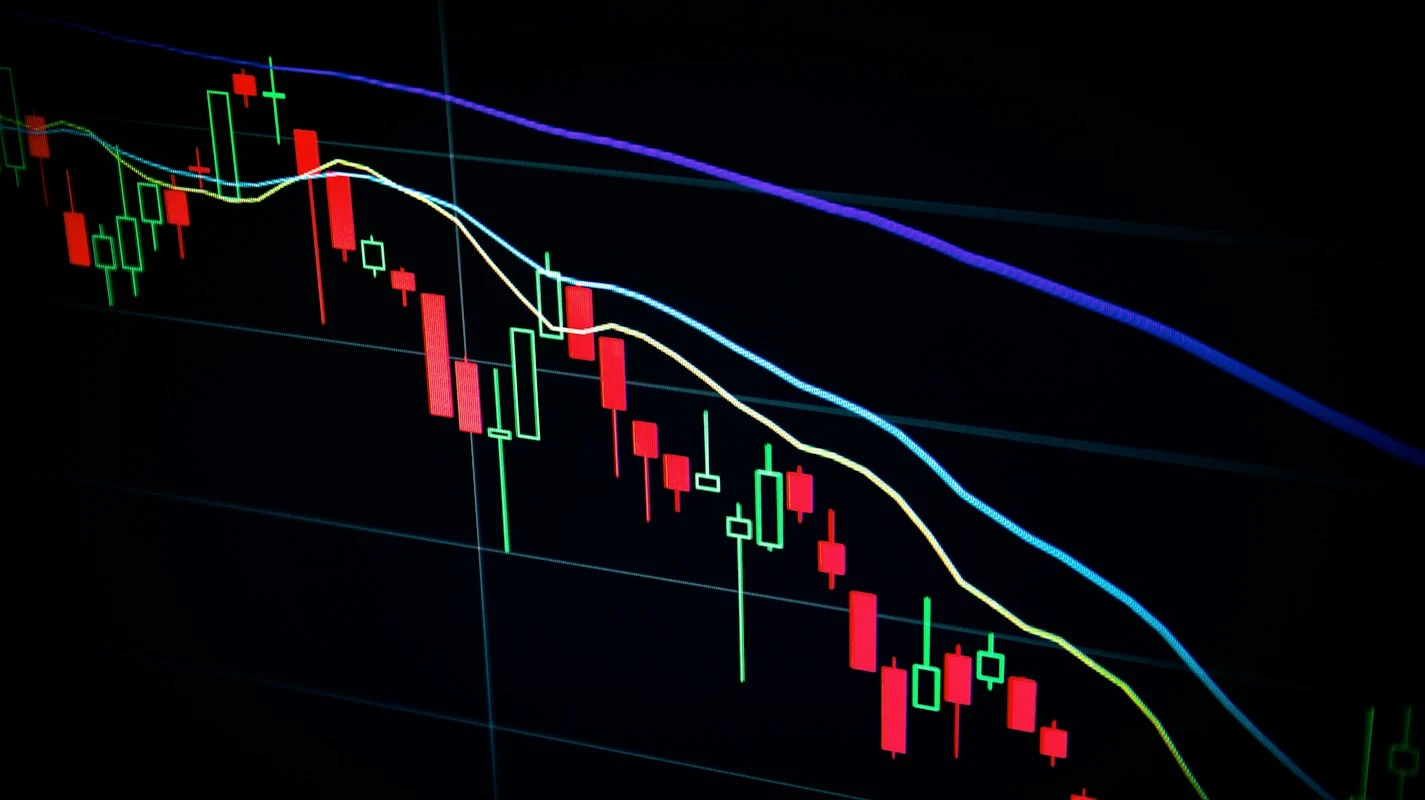
Retail traders do not usually lose because they are uninformed in a cartoonish sense. They lose because they operate inside a market where much of the real liquidity is invisible, fragmented, or routed elsewhere before they can interact with it.
How Dark Pools Protect Institutional Investors While Quietly Leaving Regular Traders Behind is especially costly for retail participants because they rely on public quotes to estimate demand. When those quotes exclude a large amount of hidden interest, the trading decision starts with incomplete data.
The practical consequence is poorer inference. A retail trader sees a move higher and assumes buyers are overwhelming sellers. But some of that move may simply reflect the absence of large hidden offers that never touched the lit market. The tape can mislead.
Fill quality also becomes harder to predict. If a retail order routes to a venue with weak price improvement, the trader may receive a marginally worse execution than the displayed quote suggested. Over time, that leakage compounds.
Retail investors are not failing the game; the game is structurally different for them. How Dark Pools Protect Institutional Investors While Quietly Leaving Regular Traders Behind creates a tiered market where the public sees the shadow of liquidity, not always liquidity itself.
That does not mean retail participants are powerless. It means their edge depends on recognizing that the visible market is only one layer of the system.
The Role of Brokers and Routing
Order flow does not travel in a straight line. It moves from retail apps to wholesalers, ATS venues, and exchanges, with each hop shaped by economics, latency, and obligations around execution quality.
How Dark Pools Protect Institutional Investors While Quietly Leaving Regular Traders Behind becomes especially relevant once brokers monetize routing decisions. Payment for order flow can fund commission-free trading, but it also creates an incentive structure that may not align perfectly with the sharpest available quote.
Under best execution rules, brokers must seek favorable terms for clients, considering price, speed, and likelihood of execution. Yet the cheapest routing choice is not always the cleanest one for price discovery or long-term market integrity.
Here is the tension in plain terms: a broker can internalize flow, capture economics from the spread, and still argue the customer received a competitive fill. The platform may look efficient at the surface while the market underneath remains less transparent.
| Routing Channel | Primary Function | Main Incentive | Transparency Level |
|---|---|---|---|
| Wholesaler | Internalizes retail orders | Monetizes order flow | Low to moderate |
| Dark Pool / ATS | Matches hidden liquidity | Minimizes market impact | Low |
| Lit Exchange | Displays quotes publicly | Price discovery | High |
The result is a routing ecosystem that can be efficient for firms while opaque for clients. That is why How Dark Pools Protect Institutional Investors While Quietly Leaving Regular Traders Behind is ultimately also a brokerage story, not just a trading-venue story.
For a deeper look at how order flow economics can shape outcomes, compare it with FTX order dynamics, where opacity served different ends but followed the same logic of hidden advantage.
What Regulators Actually Watch
Regulators do not ban dark pools outright because they serve legitimate market functions. Instead, the SEC and FINRA focus on disclosure, routing quality, and whether off-exchange trading is undermining fair access or reliable pricing.
How Dark Pools Protect Institutional Investors While Quietly Leaving Regular Traders Behind is therefore monitored through reporting regimes like Rule 605 and Rule 606, which disclose execution quality and routing relationships. Those rules help, but they do not reveal everything.
Rule 606 can show where orders were routed, yet it does not always expose the full economics behind the decision. Rule 605 can summarize execution quality, but it does not reconstruct the hidden competition that occurred before the fill.
“Transparency is necessary, but disclosure alone does not guarantee a fair market,” said former SEC official Mary Jo White in public remarks on market structure and execution quality.
The debate around trade-at protections is especially important. If too much volume escapes to venues that can match at the midpoint or outside the displayed quote, lit markets may struggle to remain the center of price formation.
That is why How Dark Pools Protect Institutional Investors While Quietly Leaving Regular Traders Behind remains central to policy analysis. The oversight regime sees the edges of the problem, but not always the full internal logic.
For official background, the SEC’s market regulation materials and FINRA’s best execution guidance are the starting points, not the end of the inquiry.
When Dark Pools Help Markets
The case against dark pools becomes overstated when it ignores legitimate use cases. For institutions managing large mandates, hidden venues can reduce volatility by preventing massive orders from slamming into the public tape all at once.
How Dark Pools Protect Institutional Investors While Quietly Leaving Regular Traders Behind can also lower transaction costs for pension capital. A steady, discreet match may preserve more value than a displayed order that invites adverse price movement before completion.
In our view, the issue is not darkness by itself. It is the scale of use, the incentives around routing, and the degree of information leakage that arises when venues are optimized for internal economics rather than market-wide clarity.
There is a reason large managers still use these venues. When handled properly, they can facilitate block trades, reduce short-term volatility, and improve implementation efficiency. The mechanism is valid even if the broader distributional outcome is uneven.
How Dark Pools Protect Institutional Investors While Quietly Leaving Regular Traders Behind becomes less controversial when the venue is used sparingly and transparently within a broader best-execution framework.
That distinction matters because the same plumbing that protects a pension fund from market impact can, at scale, leave ordinary participants trading blind against a more informed layer of capital.
The Real Debate in 2026
The modern question is not whether dark pools exist. It is whether the current market structure still optimizes fairness, liquidity, and execution quality at the same time. Those goals increasingly pull against one another.
How Dark Pools Protect Institutional Investors While Quietly Leaving Regular Traders Behind sits at the center of that conflict. Fragmentation, off-exchange execution, and venue-level incentives have created a market where transparency and efficiency no longer move in perfect sync.
The policy fight will likely intensify around disclosure, routing quality, and whether more volume should be forced back into lit venues. Critics see an entrenched information advantage. Defenders see a necessary tool for modern block execution and lower costs.
What is clear is that the future of U.S. equity trading will be shaped by who gets to see liquidity first, who gets to internalize it, and who gets left reading the tape after the trade is already priced in.
How Dark Pools Protect Institutional Investors While Quietly Leaving Regular Traders Behind is the market’s quietest power imbalance. Follow the routing, read the disclosures, and demand better transparency before the next reform cycle closes the window again.
Frequently Asked Questions about How Dark Pools Protect Institutional Investors While Quietly Leaving Regular Traders Behind
How do dark pools help institutions execute large orders without moving the market?
Dark pools let institutions match orders away from public exchanges, so large positions can be filled in smaller pieces without revealing full size. This reduces price impact, limits slippage, and helps avoid triggering other traders’ reactions before execution is complete.
Why do asset managers and pension funds prefer dark pools over lit exchanges?
They prefer dark pools because hidden liquidity can improve execution quality for block trades. By avoiding public order book exposure, institutions lower signaling risk, reduce the chance of being front-run, and preserve better pricing when trading meaningful volume.
How Dark Pools Protect Institutional Investors While Quietly Leaving Regular Traders Behind?
They protect institutions by offering anonymity, reduced market impact, and access to private matching venues. Regular traders, by contrast, rely more on public quotes and thinner displayed liquidity, which can make their execution conditions less favorable and less informed.
How are dark pools different from lit exchanges in terms of transparency and price discovery?
Lit exchanges display bids and offers publicly, supporting transparent price discovery. Dark pools do not show full order books, so public traders see less of the true supply and demand. That creates a split market where visible prices may reflect only part of the activity.
Is it a myth that dark pools always give unfair advantages, or is the concern more nuanced?
The concern is more nuanced than the myth suggests. Dark pools are not inherently abusive, but their hidden nature can advantage large institutions with complex routing tools. The real issue is whether fragmented liquidity and opacity distort fairness, transparency, and execution quality for smaller participants.