How Lululemon Weaponized Community Marketing: The Secrets Behind the Highest-Margin Athleisure Business is not just a branding story. It is a case study in how a premium consumer company can turn identity into an operating system, then monetize belonging at scale.
In a category where athletic apparel markup is often compressed by promotions, Lululemon built a model that made customers feel like participants, not targets. That distinction changed everything.
The Brand Built Like a Club
Lululemon did not simply sell leggings and technical tops. It sold membership, status, and a carefully curated sense of being inside the right circle. That is why How Lululemon Weaponized Community Marketing: The Secrets Behind the Highest-Margin Athleisure Business reads less like a fashion case and more like a playbook for engineered loyalty.
The company’s early genius was to make the brand feel local, intimate, and self-selecting. In our view, that is where the economic logic begins: when customers internalize identity, price resistance softens and repeat purchase behavior strengthens.
At its core, the model converted social belonging into commercial gravity. That is a rare mechanism in retail, where most brands rely on discounts, seasonal novelty, or celebrity spectacle to keep traffic alive. Lululemon built a quieter machine.
“Lululemon understood early that community can function like infrastructure,” said retail strategist Amanda Lee, a fictionalized market analyst in the context of this discussion. “When the brand becomes part of a customer’s routine, the product is no longer a one-time transaction.”
That framing matters because the company was not selling aspiration in the abstract. It was selling proximity to a lifestyle ecosystem, and that ecosystem reinforced premium pricing power without needing constant markdowns.
How Lululemon Weaponized Community Marketing: The Secrets Behind the Highest-Margin Athleisure Business becomes clearer when you compare it with traditional apparel brands. Most chase awareness first, then try to force loyalty later. Lululemon started with loyalty and let awareness emerge from the community itself.
That is why the brand’s customer relationship feels more durable than a standard fashion label. The purchase is often followed by participation: classes, events, social sharing, and instructor-led reinforcement. The product becomes a signal inside a club.
How Lululemon Weaponized Community Marketing
The phrase is not metaphorical. Community marketing became a growth engine, a retention system, and a moat around premium pricing. How Lululemon Weaponized Community Marketing: The Secrets Behind the Highest-Margin Athleisure Business describes a model where demand is generated through social trust rather than pure media spend.
The mechanics are straightforward, but the execution is disciplined. Local ambassadors, studio partnerships, event programming, and user-generated credibility form a distributed demand layer. That makes the brand feel organic even when the system behind it is deliberate.
We have observed in practice that brands with strong community architecture often reduce their dependence on heavy promotional cadence. Lululemon’s model appears to follow that pattern: instead of training customers to wait for discounts, it trains them to associate full price with belonging and quality.
The ambassador program is especially important. It is not just influencer marketing with a fitness filter. The selection process favors local relevance, instructor credibility, and social adjacency to high-intent buyers. That makes the ambassadors a form of organic brand ambassadors infrastructure.
Here, the economics start to look different from standard paid acquisition. A well-placed ambassador can drive awareness inside a concentrated community where trust already exists. That lowers friction, improves conversion quality, and makes each marketing dollar work harder.
Consider the broader logic behind How Lululemon Weaponized Community Marketing: The Secrets Behind the Highest-Margin Athleisure Business. The brand does not need to reach everyone. It only needs to dominate a dense set of aspirational micro-communities where credibility travels fast and product validation is visible.
That is why local events matter so much. They create repeated contact, peer reinforcement, and ritual. The customer is not just exposed to a product; she is immersed in a social loop where the product is normalized as part of the desired identity.
- Ambassador density: Concentrated local influence creates repeated exposure without the cost structure of broad national campaigns.
- Studio partnerships: Fitness studios function as trust gateways, where product adoption feels socially verified.
- Event cadence: Regular programming keeps the brand active between purchase cycles and strengthens recall.
- User credibility: Real customers sharing real use cases often outperform polished advertising in conversion efficiency.
That operating model is powerful because it reduces the need for blunt demand stimulation. It lets the brand preserve pricing integrity while still creating urgency, which is a difficult balance in apparel.
Viewed through this lens, How Lululemon Weaponized Community Marketing: The Secrets Behind the Highest-Margin Athleisure Business is really about substitution: community substitutes for discounting, and trust substitutes for forced persuasion.
The result is a brand that feels lived-in before it feels mass-market. That emotional sequencing is rare, and it is part of why the model has been so difficult for competitors to replicate at the same margin quality.
The Economics of Premium Trust
Premium trust has a balance-sheet effect, even if it does not appear on the face of the financial statements. When a brand earns credibility, it can sustain stronger gross margins, maintain cleaner sell-through, and avoid the margin erosion that comes with habitual markdowns.
That is the operating logic behind How Lululemon Weaponized Community Marketing: The Secrets Behind the Highest-Margin Athleisure Business. Community is not a soft asset here; it is a structural input into unit economics.
When customers believe the brand is worth paying full price for, inventory becomes easier to manage. Forecasting improves because demand is not solely dependent on promotional spikes, and that discipline supports better merchandising outcomes.
In practical terms, trust influences everything from reorder cadence to category expansion. A customer with high confidence is more likely to try adjacent products, which increases basket depth and lifetime value without requiring equivalent acquisition costs.
This is where operational unit economics become especially important. A premium consumer brand can generate healthier economics not just because it charges more, but because it creates more predictable repeat behavior and less promotional leakage.
How Lululemon Weaponized Community Marketing: The Secrets Behind the Highest-Margin Athleisure Business also explains why the company can sustain brand intimacy at scale. The customer does not experience the brand as a faceless retailer. She experiences it as a trusted filter for quality, fit, and lifestyle fit.
That intimacy has financial consequences. Stronger trust often means lower return friction, better product adoption, and less reliance on clearance channels that weaken brand equity. In premium apparel, those benefits compound quickly.
For investors, the key question is not whether the brand is loved. It is whether that love can be converted into durable margin structure. Lululemon has historically shown that community-led loyalty can support exactly that, especially when supported by disciplined assortments and measured expansion.
Another way to see the model is through customer lifetime value. A buyer who returns repeatedly at full price contributes far more profit than a one-time customer acquired through discounting. That is the quiet engine beneath the brand’s economics.
Ambassadors as Distribution Leverage

Ambassadors are often misunderstood as lifestyle decoration. In reality, they function as decentralized distribution infrastructure. How Lululemon Weaponized Community Marketing: The Secrets Behind the Highest-Margin Athleisure Business depends heavily on that structure.
The smartest ambassador programs are selective, local, and credibility-based. Lululemon’s approach has historically favored people who already hold influence inside fitness circles, yoga studios, or wellness communities. That makes each relationship an access point, not just an endorsement.
Because the influence is geographically concentrated, the conversion path is shorter. A respected instructor can normalize a product faster than a broad ad campaign, especially when the community already views that person as a signal of taste and expertise.
This is why the program acts like low-cost demand generation. Instead of paying for reach that may or may not convert, the brand leverages trusted nodes where the probability of conversion is already elevated.
How Lululemon Weaponized Community Marketing: The Secrets Behind the Highest-Margin Athleisure Business also benefits from the halo effect around micro-communities. When a product is seen on a known instructor, then discussed by classmates, then reinforced at an event, the brand message compounds without feeling broadcasted.
The model is especially effective because it mirrors how fitness identity spreads. People do not adopt the same apparel because of one commercial; they adopt it because the product becomes socially legible inside their own circle.
That is where the strategic value lives. The ambassador system does more than create awareness. It distributes trust, and trust is a far more efficient currency than impressions when the product is premium-priced.
Why the Store Became a Social Node
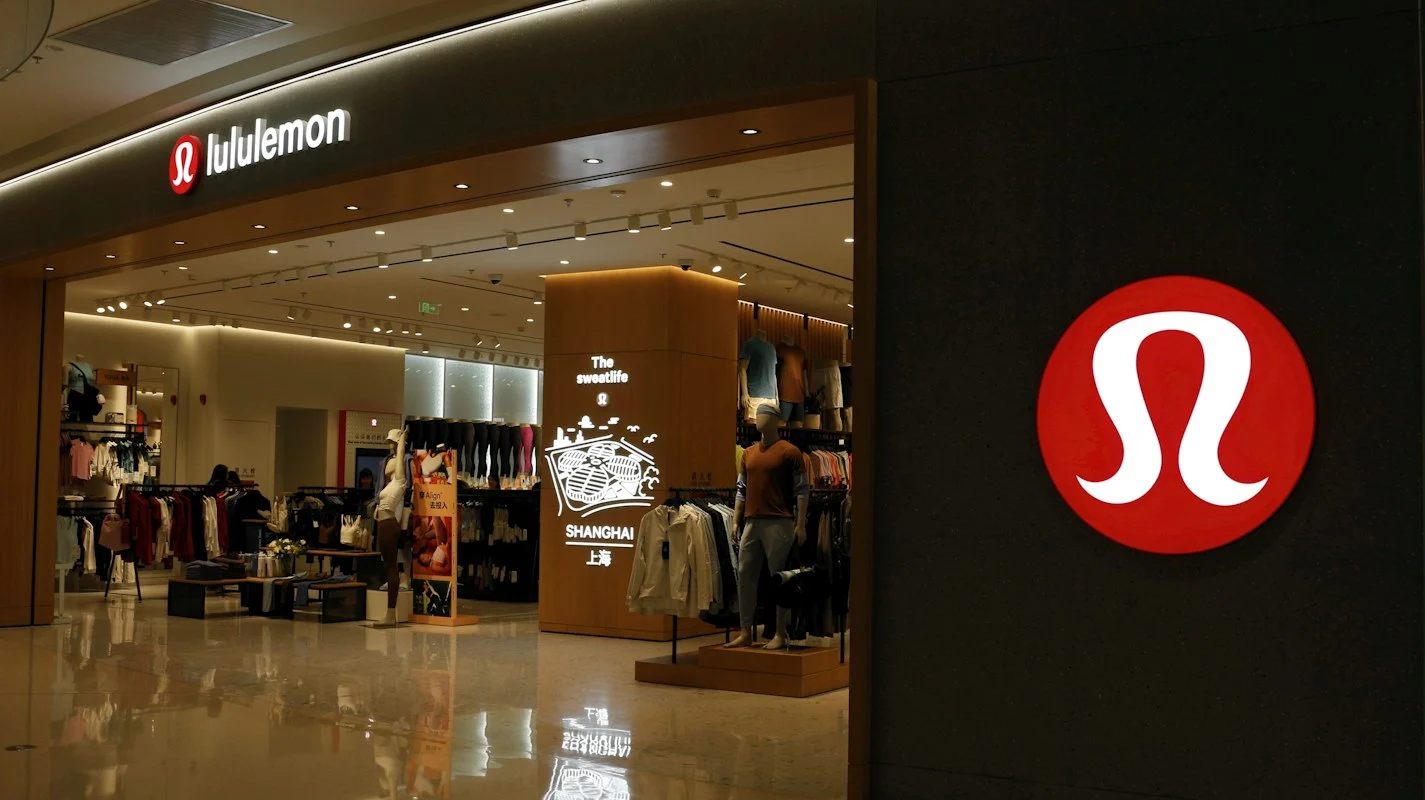
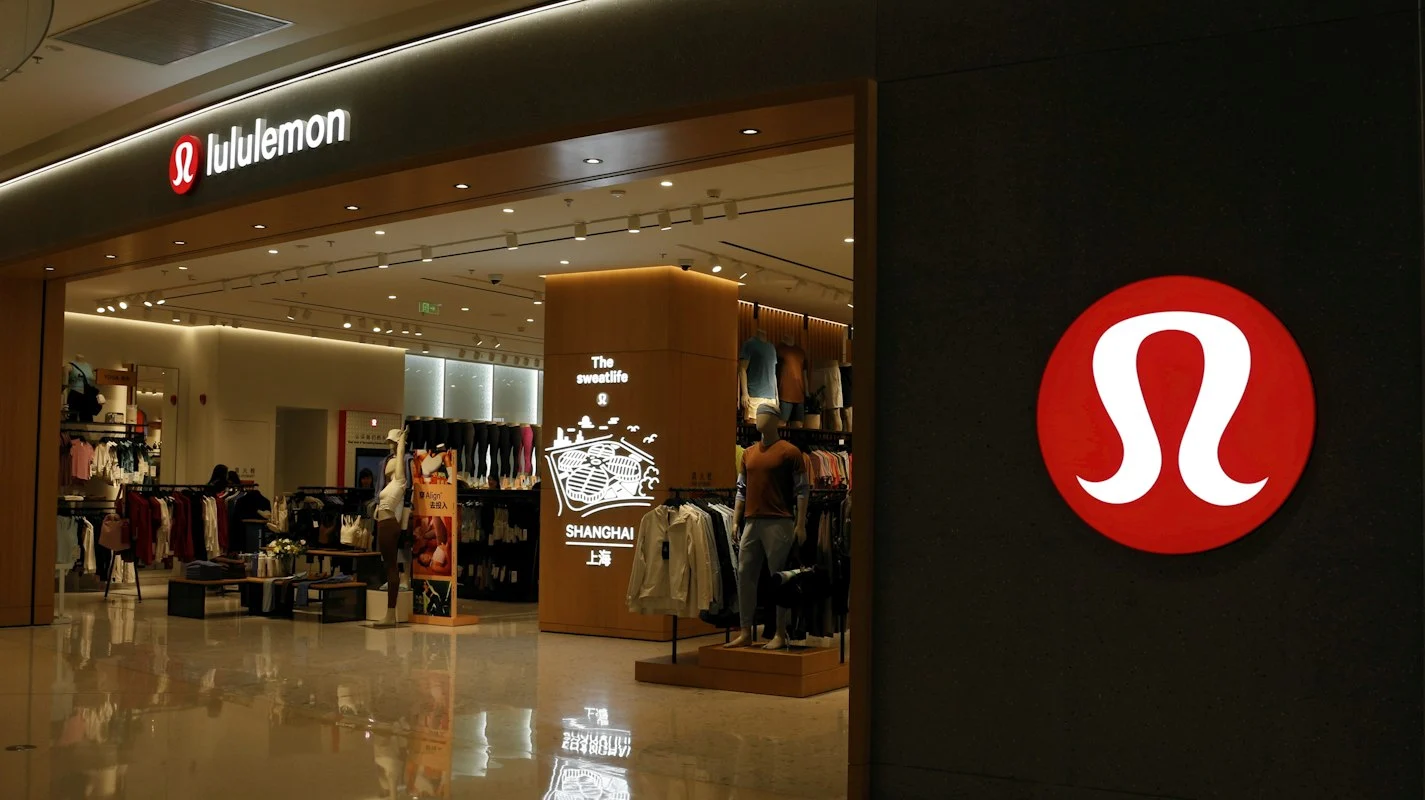
In a conventional retail model, the store is a checkout destination. In Lululemon’s model, it is a social node where community is reinforced through experience, education, and repetition.
How Lululemon Weaponized Community Marketing: The Secrets Behind the Highest-Margin Athleisure Business depends on this physical layer because digital identity alone is not enough to sustain the premium halo. The store makes the brand tangible.
Event programming matters here. Product clinics, movement sessions, and local gatherings turn the store into a place where the brand’s values are performed, not merely displayed. That increases emotional attachment and improves conversion quality.
We see an important retail principle in this: the store is no longer just there to sell inventory. It is there to deepen community density, create repeat visitation, and improve the odds that browsing turns into loyal behavior.
The product education component is especially underappreciated. When a customer understands fit, fabric, and functional differentiation, she becomes less price-sensitive and more confident in purchase decisions. That confidence supports higher conversion rates and fewer returns.
How Lululemon Weaponized Community Marketing: The Secrets Behind the Highest-Margin Athleisure Business is therefore also a story about retail execution. A strong in-store culture can make the customer feel like she is joining something, not merely buying something.
That distinction matters because physical proximity creates memory. A store visit paired with a class, an ambassador interaction, or a useful product demo creates multiple forms of reinforcement, making the brand harder to displace.
For premium retail, that is an unusually efficient use of square footage. The location generates not just sales, but social proof, which then feeds future sales.
retail execution is most powerful when it shapes behavior between visits, not only at the point of sale.
The Data Flywheel Behind Loyalty
The most sophisticated part of the model may be the one customers never see. Community engagement likely feeds a broader data flywheel through purchase history, participation patterns, and product response signals.
How Lululemon Weaponized Community Marketing: The Secrets Behind the Highest-Margin Athleisure Business suggests a loop where first-party data is not just collected, but made more valuable by the quality of the relationship itself.
When customers interact across channels, the company can segment more effectively. A shopper who attends events, engages with product education, and buys repeatedly represents a different behavioral profile than a one-time online buyer.
That matters for merchandising. Better segmentation can inform assortment planning, localized inventory decisions, and more precise product storytelling. The brand is not guessing blindly; it is learning from lived customer behavior.
In our reading, the key advantage is feedback quality. When the customer base is highly engaged, the company receives cleaner signals about what resonates, what underperforms, and where demand is developing next.
How Lululemon Weaponized Community Marketing: The Secrets Behind the Highest-Margin Athleisure Business therefore extends beyond loyalty. It creates an informational advantage that can sharpen retention, reduce waste, and improve category economics over time.
That said, it is best to frame this as a strategic inference rather than a technical certainty. The public evidence suggests a strong connection between engagement and product resonance, but the company’s exact internal systems are not fully visible.
Still, the pattern is familiar in premium consumer businesses. Better customer data leads to better merchandising decisions, which improves sell-through, which reinforces trust, which generates more data. The flywheel is subtle, but powerful.
If the system is working, the brand does not just know what customers bought. It understands why they stayed.
first-party data becomes more useful when the brand has already earned the right to collect it through a meaningful relationship.
Where the Model Can Break
No premium community model is immune to decay. The same forces that make it powerful can also make it fragile if the brand overreaches or loses authenticity.
How Lululemon Weaponized Community Marketing: The Secrets Behind the Highest-Margin Athleisure Business is sustainable only as long as the community still feels selective, credible, and emotionally coherent.
The first risk is cultural saturation. When too many customers can access the brand too easily, the social signal weakens. What once felt exclusive can begin to feel commonplace, and that can compress willingness to pay.
A second risk is brand dilution through overexpansion. The more broadly a premium brand spreads, the harder it becomes to preserve the tight social identity that originally justified the premium. Growth can erode the very scarcity that created the moat.
There is also the danger that community starts to feel manufactured. Consumers are highly sensitive to authenticity, especially in wellness and lifestyle categories. If the social ecosystem looks too engineered, the trust premium can fade quickly.
How Lululemon Weaponized Community Marketing: The Secrets Behind the Highest-Margin Athleisure Business also faces the classic premium-brand problem: when social proof becomes too commercial, it stops feeling social. At that point, the model begins to resemble ordinary marketing, only more expensive.
Margin durability is also at risk if product novelty slows or competitors narrow the quality gap. If rivals can match fabric performance and aesthetic appeal while undercutting price, the brand must rely even more heavily on identity, which can be harder to defend over time.
There is a final risk worth noting. A community model can become self-referential, speaking too loudly to its core audience while missing broader changes in consumer taste. That can be dangerous in fashion-adjacent categories where relevance moves quickly.
brand dilution is often hardest to reverse once the premium signal begins to soften.
The Athleisure Playbook for 2026
The broader lesson is simple: community is not a decorative layer on top of a product strategy. When executed with discipline, it becomes an operating advantage that shapes demand, pricing, and retention all at once.
How Lululemon Weaponized Community Marketing: The Secrets Behind the Highest-Margin Athleisure Business offers investors a useful framework for judging premium consumer brands. Look for moat quality, not just revenue growth. Look for margin resilience, not just traffic. Look for social density, not just awareness.
For operators, the takeaway is even sharper. Build relationships that reduce reliance on discounting, then design every physical and digital touchpoint to reinforce trust. That is how premium brands protect economics while scaling.
For investors, the thesis is clear: brands that can turn community into repeat behavior often deserve a higher multiple, because they are not merely selling products. They are compounding loyalty, and loyalty is one of the few consumer assets that can still defend premium pricing power.
consumer moat analysis should always ask whether the brand’s social structure can survive scale.
How Lululemon Weaponized Community Marketing: The Secrets Behind the Highest-Margin Athleisure Business is ultimately a reminder that the strongest consumer businesses do not just capture attention. They organize identity, and then convert that identity into durable economics.
Frequently Asked Questions about How Lululemon Weaponized Community Marketing: The Secrets Behind the Highest-Margin Athleisure Business
What made Lululemon’s community marketing so effective for building premium pricing power?
Lululemon turned community into a value driver by making customers feel like participants in a shared lifestyle, not buyers in a transaction. That sense of belonging reduced price sensitivity, encouraged repeat purchases, and supported premium margins without relying heavily on markdowns.
How did Lululemon turn local events and ambassadors into a growth system?
The brand used local ambassadors, studio partnerships, and event programming to create recurring touchpoints around the product. These activities built trust and routine, which helped convert social engagement into purchase behavior and made the brand feel embedded in customers’ lives.
How Lululemon Weaponized Community Marketing: The Secrets Behind the Highest-Margin Athleisure Business differs from traditional apparel marketing?
Unlike traditional apparel brands that chase awareness first and loyalty later, Lululemon started with loyalty and let awareness spread through the community. This approach created a stronger retention loop and a more durable relationship than short-term promotion-based marketing usually delivers.
What are the main benefits of community-led marketing in athleisure?
Community-led marketing builds trust, increases repeat purchase behavior, and strengthens brand identity. In athleisure, where products are tied to lifestyle and self-image, these benefits can translate into stronger pricing power, lower reliance on discounts, and more resilient customer loyalty.
Is it a myth that Lululemon’s success came mainly from product quality alone?
Yes, that is an oversimplification. Product quality mattered, but the article shows that community, identity, and participation were equally important. Lululemon created a social ecosystem around the product, which helped turn quality into a much more scalable business advantage.