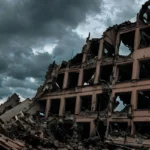
The Dark Side of Private Military Corporations: The Highly Profitable Business of Global Security is no longer a niche headline. In 2024, the private security and defense outsourcing market was measured in the tens of billions, and it keeps expanding as conflicts become more fragmented and politically costly.
Who profits when states outsource force? The answer sits at the intersection of procurement, deniability, and shadow market economics, where security becomes a billable service and risk is packaged into contracts, retainers, and contingency clauses.
How the Industry Got Here
The modern industry emerged after the Cold War, when defense downsizing left militaries leaner and governments more willing to outsource non-core functions. That shift helped normalize corporate warfare as a service model.
The post-1990s security environment changed the economics of force. As asymmetric warfare spread, states needed rapid deployment, language skills, logistics, and local intelligence without permanently enlarging uniformed ranks. The result was a durable market with strong defense contract margins.
We have observed in practice that privatization rarely starts with combat. It starts with support work, then expands into advisory, training, convoy protection, and site security. Once those roles become routine, the line between public authority and private execution weakens.
That evolution also reflects state demand. Governments wanted flexibility; contractors wanted scale. Together, they built the modern geopolitical risk business, where instability is not only managed but monetized. The business logic is simple: where uncertainty rises, billing power follows.
For investors, the historical pattern matters. Every major conflict wave has widened the addressable market, from post-9/11 theaters to resource corridors and fragile states. The industry’s growth has been driven less by ideology than by procurement necessity and political convenience.
The Business Model Behind Security

The revenue model is built on layered billing. Firms earn from government contracts, corporate retainers, embedded advisory teams, logistics support, and training programs. In high-risk theaters, those services can be priced at a premium because failure is measured in lives, assets, and political fallout.
Recurring demand is the real engine. A single client may need perimeter defense, evacuation planning, threat intelligence, and convoy escort simultaneously. That bundled structure improves utilization and supports strong defense contract margins, especially when the client lacks in-house capacity.
Margins also benefit from cost structure asymmetry. Labor is expensive, but much of the overhead is fixed: command systems, compliance staff, insurance, and procurement channels. Once contracts are won, incremental work can generate high cash flow relative to capital intensity.
Pricing power is strongest in unstable environments. If a region is too dangerous for conventional vendors, the contractor with the right licenses, vetted personnel, and existing infrastructure can command a near-monopoly. That is one reason the sector resembles shadow market economics more than classic defense manufacturing.
Internal allocation matters too. A firm can cross-sell intelligence support, surveillance, and extraction logistics across the same client relationship. That bundling deepens lock-in and makes switching vendors risky for buyers who fear service disruption.
- Retainers: Ongoing access fees that secure readiness, staffing, and rapid response capacity.
- Embedded services: Teams placed inside client operations for security, planning, or advisory support.
- Contingency operations: Event-driven deployments triggered by evacuations, unrest, or escalations.
The Dark Side of Private Military Corporations
The sector’s darker edge begins with accountability gaps. When incidents occur, responsibility can be diluted across the contractor, the client, subcontractors, and host-country authorities. That diffusion creates an enforcement problem and often delays meaningful consequences for misconduct.
Civilian harm is the most visible risk, but incentive misalignment is the deeper one. If a contract rewards presence, persistence, or asset protection rather than mission success, personnel may prioritize billing continuity over strategic restraint. That is where corporate warfare becomes ethically corrosive.
Jurisdictional ambiguity compounds the issue. Contractors may operate under domestic law, host-state rules, military codes, or contractual arbitration terms, depending on the theater. In our reporting, that patchwork often leaves victims with no clear venue for redress.
There is also a reputational cost to clients. A company that relies on armed contractors in a volatile region may face investor backlash, NGO scrutiny, and board-level governance questions. The risk is not only legal; it is narrative control.
Finally, the darker side is operational. Private units can bring speed and specialization, but they can also create parallel chains of command. When those chains are poorly integrated, mission coherence weakens and oversight becomes performative rather than real.
Contractors in War Zones

In active theaters, private personnel rarely stay in a single lane. They can guard bases, escort convoys, train local forces, run communications, and support intelligence collection. The work is often framed as defensive, yet the operational environment can shift that role toward exposure.
The blurred line between support and combat is what makes the sector strategically sensitive. A convoy security team may never be labeled combatants, but if an ambush occurs, the distinction becomes operationally irrelevant. That ambiguity increases both liability and escalation risk.
States and corporations use contractors because they compress deployment timelines. We have seen that logic repeatedly: a uniformed force requires political approval, while a contractor can often be mobilized through procurement channels faster and with less public scrutiny.
This flexibility is attractive, but it also raises reputational hazards. If contractor conduct becomes the headline, the sponsoring government or company inherits the blame. That is especially true when operations occur near civilian populations, where any mistake can become a strategic liability.
On the ground, the work is often less glamorous than the branding suggests. It is checkpoint rotations, route reconnaissance, access control, and incident reporting. Yet each task sits inside a larger system of force projection that extends well beyond simple guard duty.
Legal Loopholes and Liability
The legal framework is fragmented. Domestic statutes may cover weapons licensing or labor rules, while international humanitarian law addresses conduct in conflict. Contractual clauses then add indemnities, venue selection, and arbitration language that can limit where claims are heard.
That structure gives firms room to maneuver. In practice, a contractor can be headquartered in one country, staffed in another, and operating in a third, with a client from a fourth. That is why post-incident enforcement often becomes a jurisdictional maze rather than a clean legal process.
Weak regulatory regimes make the problem worse. Some host countries lack the capacity to investigate, while others depend economically on the contracts themselves. In those environments, liability can be delayed, diluted, or quietly settled before public scrutiny intensifies.
As legal scholar Sarah Kendal noted in testimony before a policy forum, “When force is outsourced across borders, responsibility is often the first thing to disappear.” That line captures the enforcement gap that defines much of the sector.
International Humanitarian Law still sets the baseline, but enforcement depends on evidence, venue, and political will. Those three variables rarely align after a high-risk incident, especially when multiple subcontractors are involved.
How Governments Depend on Them
Governments rely on contractors for deniability, speed, and specialized capability. Outsourcing lets leaders expand capacity without visibly expanding troop commitments, which can be politically useful during unpopular or prolonged conflicts.
The procurement logic is straightforward. Contractors can be hired for a narrow mission, scaled up quickly, and released when the mission changes. That flexibility turns private firms into force multipliers inside a broader security architecture.
We see this dependence most clearly in logistics, training, intelligence support, and infrastructure protection. Those functions may look secondary, but they are operationally essential. If a government cannot staff them fast enough, the private sector fills the gap.
The tradeoff is hidden dependency. Once a state outsources a critical capability, it may lose organic capacity over time. That creates a governance paradox: the more efficient the outsourcing, the harder it becomes to reverse.
Political flexibility matters too. A government can reduce visible casualties, avoid domestic backlash, and preserve room for negotiation. Yet the underlying mission may still rely on contractors whose presence is publicly understated and strategically indispensable.
Risks for Investors and Clients
For investors, lenders, insurers, and corporate clients, exposure is rarely limited to one incident. A scandal can trigger contract termination, sanctions review, litigation, and valuation pressure at the same time. That is why the sector carries outsized geopolitical risk business characteristics.
In our analysis, the most dangerous feature is tail risk. A single event can move across financial, legal, and reputational channels faster than models predict. Once that happens, the downside is rarely confined to the operating subsidiary.
regulatory filings may not fully capture this exposure, especially when revenue is concentrated in conflict-sensitive contracts or politically exposed jurisdictions. Investors need to read beyond topline growth and examine incident history, insurance coverage, and client concentration.
The table below summarizes the main risk categories.
| Risk Category | Primary Exposure | Typical Impact |
|---|---|---|
| Regulatory | Licensing, sanctions, export controls, procurement scrutiny | Contract delays, fines, debarment |
| Operational | Mission failure, civilian incidents, personnel loss | Higher claims, insurance pressure, service disruption |
| Geopolitical | Conflict escalation, regime change, host-country instability | Asset seizure, evacuation costs, abrupt termination |
| ESG-related | Human rights allegations, governance concerns, stakeholder backlash | Investor exits, reputational damage, covenant stress |
That table hides a larger truth: due diligence in this sector must be forensic. Investors should examine subcontracting chains, indemnity clauses, and incident disclosure practices. Clients should also test whether the vendor’s crisis playbook is real or just polished sales material.
Where private security firms intersect with public capital, the risk is amplified. One disputed deployment can affect financing terms, board oversight, and insurance renewals, particularly when the story becomes part of the broader shadow market economics of crisis response.
The Next Phase of Privatized Force
The future of the sector will likely be shaped by AI-enabled surveillance, drone support, cyber operations, and sensor-driven monitoring. Those capabilities can make private firms more scalable, but they also expand the ethical and legal surface area.
As budgets tighten and conflicts become more complex, states may lean even harder on outsourced capacity. At the same time, regulators will face pressure to demand clearer transparency, tighter licensing, and better incident reporting from firms operating in contested spaces.
That tension will define the next decade. The market may grow, but scrutiny will intensify, especially where democratic oversight is weak and contractors perform tasks once reserved for sovereign forces. In that world, The Dark Side of Private Military Corporations: The Highly Profitable Business of Global Security will remain a story about money, power, and accountability.
If investors, policymakers, and clients want to avoid becoming collateral damage, they need to treat private force as a balance-sheet issue, not just a security purchase. The smartest move is to demand transparency before the next crisis forces it.
Frequently Asked Questions about The Dark Side of Private Military Corporations: The Highly Profitable Business of Global Security
What makes The Dark Side of Private Military Corporations: The Highly Profitable Business of Global Security so profitable?
Its profitability comes from layered billing, recurring demand, and premium pricing in high-risk environments. Companies sell security as a service through contracts for advisory work, logistics, convoy protection, and threat intelligence, while fixed overhead stays relatively stable.
How did private military corporations become such a major part of global security?
They expanded after the Cold War, when militaries downsized and governments began outsourcing non-core tasks. As asymmetric conflicts grew, states needed rapid deployment, language skills, logistics, and local knowledge without permanently increasing their own armed forces.
What services do private military corporations usually provide before moving into combat roles?
They typically start with support functions such as training, advisory services, site security, and convoy protection. Over time, these roles can broaden into more sensitive operations, which gradually blurs the boundary between public military authority and private execution.
How do private military corporations compare with traditional state militaries?
Unlike state militaries, contractors offer flexibility, specialized expertise, and fast scaling for specific missions. However, they operate under commercial incentives, which can prioritize contract value, deniability, and speed over the broader accountability expected from public institutions.
Is it true that private military corporations thrive only in war zones?
That is a common myth. While conflict zones are important, the industry also profits from fragile states, resource corridors, corporate risk management, and evacuation planning. Instability increases demand across multiple sectors, not just active battlefields.