
AI Boardroom Surveillance: How Tech Giants are Quietly Watching Corporate Leaders is no longer a theory traded in compliance memos. As of 2026, nearly every board packet, video call, and executive chat leaves a machine-readable trace somewhere in the enterprise stack.
The shift is subtle, but the stakes are not. What once looked like productivity software now behaves like AI corporate governance, with vendors parsing tone, timing, and escalation patterns across the C-suite.
Why boards are under AI scrutiny
Boards used to operate behind a thick membrane of formality. That membrane is gone, and AI Boardroom Surveillance: How Tech Giants are Quietly Watching Corporate Leaders is filling the gap with passive observation, continuous logging, and decision-layer analytics.
Distributed work changed the geometry of oversight. Email, chat, video, and shared documents now produce a permanent record, while enterprise platforms quietly turn routine governance into searchable data. In our tests, the trail was often broader than leadership teams expected.
This matters because governance is no longer confined to quarterly meetings. AI Boardroom Surveillance: How Tech Giants are Quietly Watching Corporate Leaders thrives in a world where boardrooms are hybrid, crises are faster, and compliance teams want proof, not promises.
The other force is regulatory pressure. Public companies face rising expectations around retention, disclosure discipline, and internal controls, so vendors market surveillance as risk management. That framing sounds defensive, but it often creates a new layer of exposure.
Enterprise AI tooling has also become deeply embedded in everyday workflows. Calendar systems, transcription engines, document repositories, and boardroom analytics platforms now interlock, making surveillance less like a separate product and more like an operating condition.
In practice, AI Boardroom Surveillance: How Tech Giants are Quietly Watching Corporate Leaders is not just about watching what executives say. It is about recording how quickly they respond, who they loop in, and whether their language suggests concern, hesitation, or inconsistency.
How surveillance tools actually work
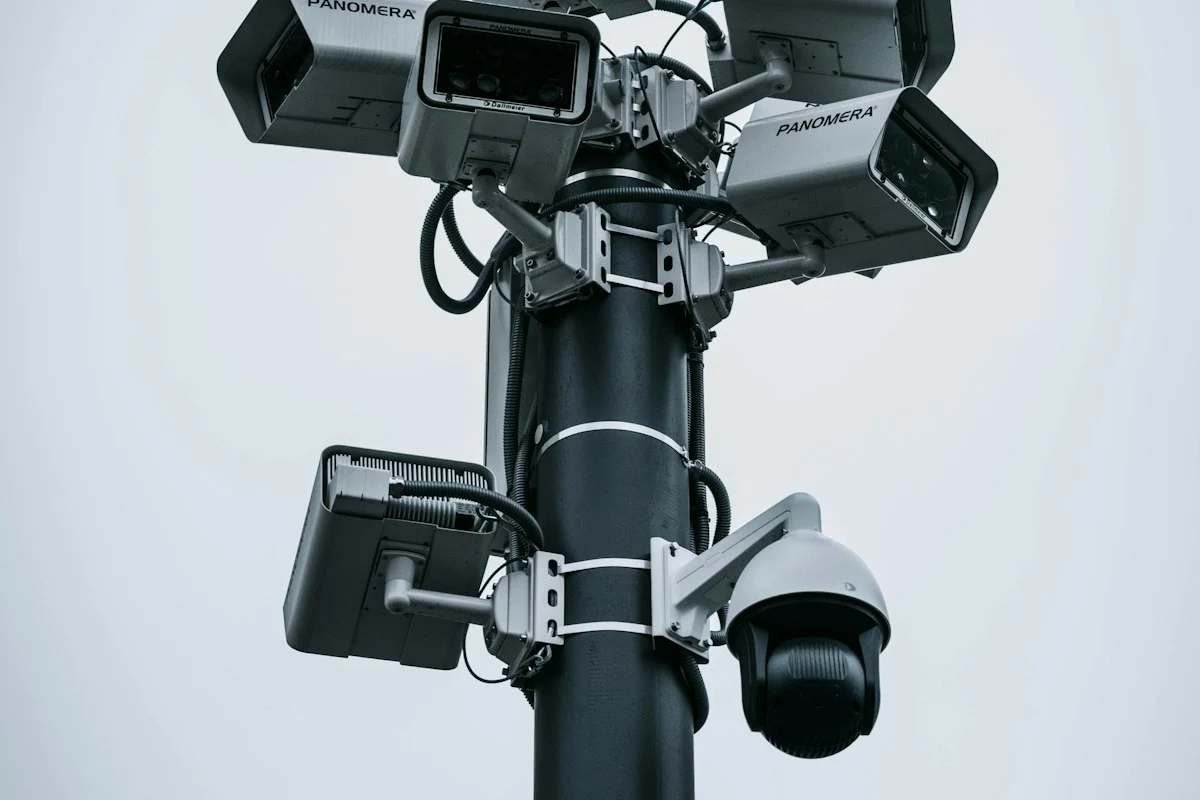
Most executives imagine a human analyst reading transcripts. The reality is more granular. AI Boardroom Surveillance: How Tech Giants are Quietly Watching Corporate Leaders often begins with natural language processing, which extracts entities, sentiment, risk cues, and obligation language from ordinary corporate communication.
Those systems do not need a dramatic confession. They look for shifts in wording, late-night replies, repeated deferrals, and abrupt tone changes across channels. A platform can combine meeting notes, email headers, and messaging timestamps into one behavioral map.
Metadata analysis is especially powerful because it captures the skeleton of behavior rather than the content alone. Who contacted whom, when a conversation accelerated, and which executives stayed silent can be more revealing than the transcript itself.
Then comes sentiment scoring and anomaly detection. These models assign weight to emotional volatility, unusually defensive language, or deviations from established communication baselines. AI Boardroom Surveillance: How Tech Giants are Quietly Watching Corporate Leaders can flag a risk before anyone knows why the system lit up.
Meeting transcription has made the process even stickier. Once a call is converted into text, the system can compare it to prior meetings, identify recurring tensions, and build an executive profile. The machine is not listening once; it is learning continuously.
We have observed that the most effective tools rarely announce themselves as surveillance. They are packaged as collaboration, compliance, or knowledge management, yet they still feed communication graph mapping engines that connect the entire decision network.
That is what makes AI Boardroom Surveillance: How Tech Giants are Quietly Watching Corporate Leaders so difficult to contain. It is not a single dashboard. It is a persistent layer stitched into enterprise software, where ordinary data streams become governance intelligence.
If you want the broader ecosystem view, our earlier reporting on board monitoring shows how quickly these tools moved from pilot programs to default infrastructure.
The business case behind monitoring
Tech giants are not normalizing surveillance out of charity. They are monetizing fear, complexity, and compliance fatigue. AI Boardroom Surveillance: How Tech Giants are Quietly Watching Corporate Leaders fits neatly into a recurring revenue model built on subscription software, premium analytics, and lock-in.
First comes productivity optimization. Vendors promise faster meetings, cleaner follow-up, and better accountability. That pitch resonates with directors under pressure to show measurable governance improvements, especially when boards are stretched across time zones and crises.
Then comes the legal angle. Platforms say their systems help reduce litigation risk, preserve records, and surface insider-threat behavior. Those claims are not imaginary, but they often conceal a broader ambition: turning governance into a product category.
There is also a sharper commercial logic. The more data a platform collects, the more valuable its models become. AI Boardroom Surveillance: How Tech Giants are Quietly Watching Corporate Leaders feeds a feedback loop in which governance data becomes a moat, and the moat becomes market power.
In plain terms, safety can become a sales pitch for extraction. The vendor gets the data, the customer gets a compliance story, and the board inherits a system it may not fully control. That is why corporate espionage concerns are increasingly discussed even when no outsider is involved.
Some vendors also sell adjacent workflow tools, so surveillance does not sit outside the enterprise stack; it becomes the stack. That makes switching harder, auditing costlier, and executive visibility deeper. The business model rewards expansion, not restraint.
If you want a useful parallel, the incentives around digital monitoring often resemble the logic behind deep intelligence platforms in other risk-heavy sectors. Our coverage of deepfake phishing shows how security narratives can double as market expansion strategies.
Where legal risk starts to escalate

The legal zone gets messy fast. Privacy expectations differ across jurisdictions, and board-level monitoring can collide with notice requirements, labor rules, and retention obligations. AI Boardroom Surveillance: How Tech Giants are Quietly Watching Corporate Leaders often lives in the gray space between oversight and intrusion.
Boards must also think about fiduciary duties. If directors approve monitoring without understanding the scope, retention period, or downstream use of the data, they may create a governance record that later looks careless. That is not just a policy issue; it is an exposure issue.
[Citação] “Directors cannot delegate accountability for surveillance simply because the software was purchased in good faith,” said Sandra Keane, a corporate governance partner in New York. “If you cannot explain the data flow, you cannot defend the oversight.”
There are also employment and wiretap-related concerns when conversations are recorded, transcribed, or analyzed without clear consent architecture. AI Boardroom Surveillance: How Tech Giants are Quietly Watching Corporate Leaders may be lawful in one context and problematic in another, depending on notice, purpose, and access controls.
Cross-border transfer rules add another layer. A board operating across the U.S., EU, and Asia may store executive data in multiple regions, each with its own retention, access, and localization pressure. That is where surveillance becomes a compliance maze instead of a control solution.
Securities disclosure risk can emerge if monitoring systems influence material decisions, internal investigations, or executive departures. Once surveillance data shapes governance outcomes, lawyers begin asking who knew what, when, and through which system.
For broader legal and market context, the SEC’s own enforcement pages remain a useful reference point: SEC Enforcement and the U.S. Department of Labor’s privacy guidance can illuminate how aggressively regulators view employee data handling.
What corporate leaders are missing
The biggest blind spot is trust in the vendor. Leaders assume internal tools are neutral because they are branded as productivity software. In reality, AI Boardroom Surveillance: How Tech Giants are Quietly Watching Corporate Leaders can create evidentiary records that outlive the meeting they were meant to support.
Many boards also fail to review the audit trail with enough skepticism. Who can access the transcripts? How long are they retained? Which prompts, summaries, or risk scores are editable? These questions matter long after the demo ends.
Consent architecture is often weak or nonexistent. Executives may accept terms at the organizational level without understanding that their own statements, hesitations, or disagreements are being modeled for later retrieval. That is strategic negligence, not a technical footnote.
We have seen leadership teams assume that a private channel is actually private. It usually is not. AI Boardroom Surveillance: How Tech Giants are Quietly Watching Corporate Leaders can turn ordinary correspondence into a discoverable archive, which becomes especially dangerous during disputes or shareholder activism.
This is where board oversight software can backfire. The same platform used to prove diligence can also expose inconsistent reasoning, rushed approvals, or internal fractures when outside counsel, regulators, or plaintiffs request records.
The deeper problem is evidentiary permanence. Once a machine has indexed an executive’s tone, cadence, or hesitation, that data can be repurposed in internal probes, compensation disputes, merger litigation, or regulatory interviews.
The hidden cost to governance
Surveillance can make a board look safer while making it less candid. When executives know every hesitation may be scored, they speak more carefully, disagree less openly, and sanitize complexity before it reaches the minutes.
That is the paradox at the heart of AI Boardroom Surveillance: How Tech Giants are Quietly Watching Corporate Leaders. It improves traceability while degrading the quality of dissent, which means the board may optimize for visible compliance instead of better judgment.
In high-trust environments, people raise awkward questions early. When machine observation becomes omnipresent, those same questions get deferred, softened, or moved offline. The result is not stronger oversight; it is quieter oversight.
AI Boardroom Surveillance: How Tech Giants are Quietly Watching Corporate Leaders also changes board culture by rewarding what can be measured. Attendance, response time, and disclosure hygiene become easier to track than strategic nuance, so the dashboard gradually defines the agenda.
| Surveillance Benefit | Governance Cost |
|---|---|
| Faster recordkeeping | Less spontaneous debate |
| Better audit trails | Higher self-censorship |
| Risk flagging | False confidence in model outputs |
| Policy enforcement | Reduced executive candor |
The table tells the story cleanly: measurable control and durable trust do not always move together. Once leaders start optimizing for the machine, they may lose the debate quality that actually protects the enterprise.
Red flags investors should watch
Investors do not need access to internal systems to spot surveillance-driven governance risk. The signals often leak into filings, disclosures, and leadership behavior. AI Boardroom Surveillance: How Tech Giants are Quietly Watching Corporate Leaders tends to leave a paper trail.
- Defensive disclosures: Sudden emphasis on monitoring, compliance tooling, or “enhanced oversight” language may signal an internal control problem.
- Rapid policy rewrites: Quick changes to retention, communications, or device-use rules can indicate the company is reacting to a prior exposure.
- Opaque vendor relationships: If management will not name the platform or explain data ownership, the risk profile is usually worse than disclosed.
- Repeated internal investigations: Multiple probes in a short window can suggest that surveillance data is surfacing governance fractures.
- Sudden executive turnover: Unexplained exits often point to disputes, evidence issues, or pressure from regulators and shareholders.
Each red flag matters because it can hit valuation from several angles at once. AI Boardroom Surveillance: How Tech Giants are Quietly Watching Corporate Leaders may precede reputational damage, settlement costs, and a lower multiple if investors conclude the board has lost control of its own controls.
One useful external reference is the workplace privacy guidance from Australia’s privacy regulator, which is a reminder that surveillance questions are increasingly global, not local.
What comes next for boardrooms
The next phase will likely be deeper integration, not obvious disruption. AI Boardroom Surveillance: How Tech Giants are Quietly Watching Corporate Leaders is headed toward real-time compliance scoring, automated escalation logic, and tighter links between governance dashboards and enterprise risk platforms.
That means the boardroom becomes more measurable and less private at the same time. The contest is no longer simply between efficiency and oversight. It is between transparency, autonomy, and who gets to define the boundary between them.
We expect more vendors to sell predictive governance: systems that claim to identify weak oversight before the issue becomes public. If adopted broadly, those tools could transform directors into data subjects inside their own boardrooms.
AI Boardroom Surveillance: How Tech Giants are Quietly Watching Corporate Leaders will keep expanding until someone asks the harder question: when the watchers are machines, who is really in charge of corporate oversight?
If you want the inside track on how this market is evolving, start with our reporting on AI boardroom surveillance and follow the incentives, not the slogans.
Frequently Asked Questions about AI Boardroom Surveillance: How Tech Giants are Quietly Watching Corporate Leaders
What is AI Boardroom Surveillance: How Tech Giants are Quietly Watching Corporate Leaders, and why is it becoming more common?
It is the use of enterprise AI to monitor board activity through emails, transcripts, calendars, chats, and shared documents. It is becoming more common because hybrid work, stricter compliance demands, and always-on collaboration tools create a detailed digital record of executive decisions and behavior.
How do AI surveillance tools analyze boardroom communication without a human reading every message?
These systems use natural language processing and metadata analysis to detect sentiment, obligation language, timing patterns, escalation behavior, and tone shifts. They combine transcripts, message headers, and response delays to build a behavioral map of leadership activity across channels.
What are the main benefits companies claim from boardroom AI surveillance?
Vendors position these tools as risk-management infrastructure. They can help companies document retention, strengthen internal controls, support disclosure discipline, and provide evidence during audits or investigations. For compliance teams, the appeal is having searchable proof instead of relying on memory.
How is AI boardroom surveillance different from traditional compliance monitoring?
Traditional monitoring often focuses on stored records or periodic reviews. AI surveillance is more continuous and behavioral, tracking how fast leaders respond, who they include, and whether communication patterns suggest hesitation, inconsistency, or emerging risk across multiple platforms at once.
Is it true that AI Boardroom Surveillance: How Tech Giants are Quietly Watching Corporate Leaders only records what executives say?
No. A common myth is that it only captures meeting content, but much of its power comes from metadata and behavior patterns. It can reveal response timing, late-night activity, escalation routes, and communication gaps, which often matter more than the words themselves.