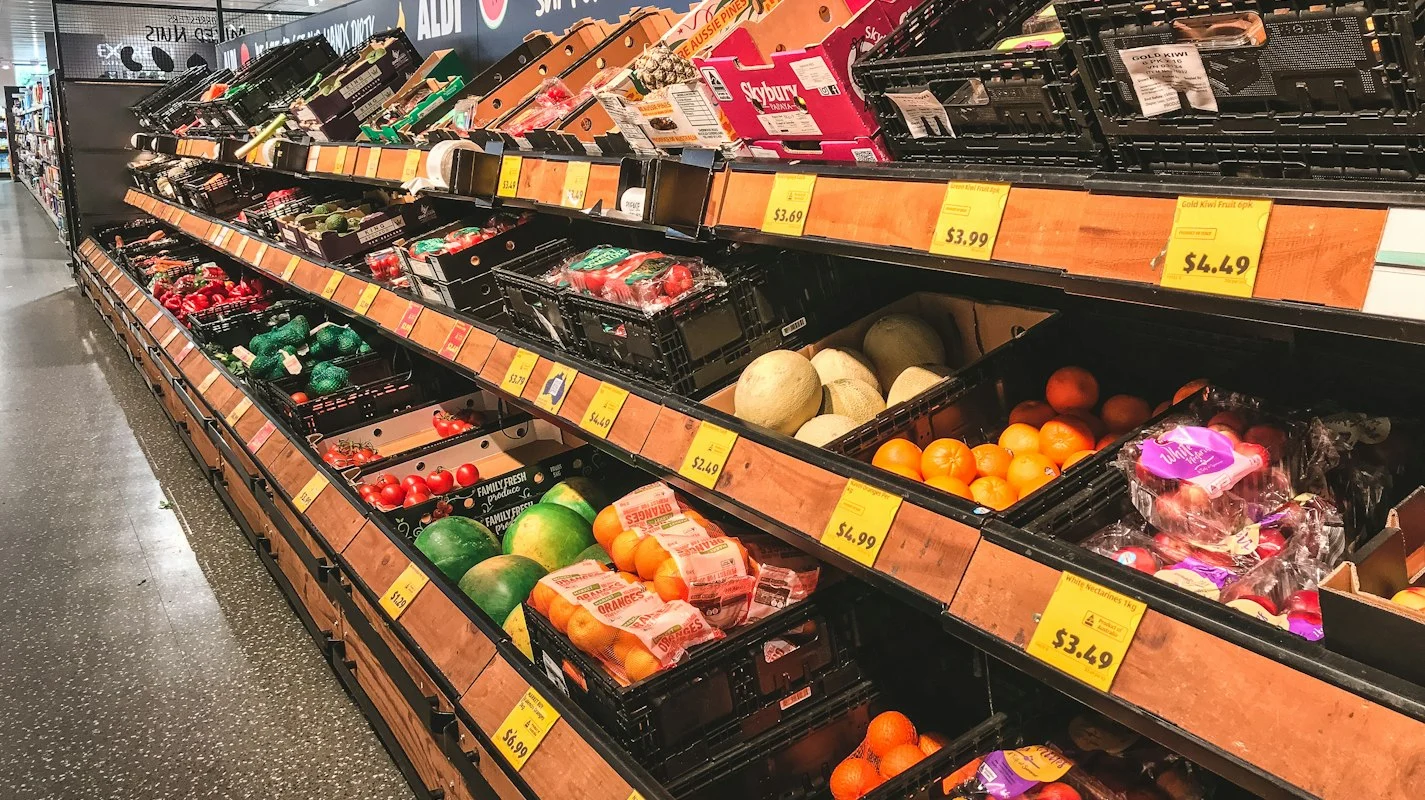
Aldi private label grocery strategy is not a branding flourish; it is a cost architecture. When a grocer trims thousands of SKUs, it changes the entire economics of the store: labor, inventory, purchasing power, and margin leakage all move in the same direction.
That is why Aldi’s model keeps attracting analysts. In a market where private label goods now anchor value-seeking behavior, the company turns simplicity into leverage and makes limited assortment look like an operating system rather than a compromise.
Why Aldi cuts brand clutter
Aldi’s first advantage is not the shelf; it is the absence of excess. By reducing brand clutter, Aldi strips out the coordination burden that slows conventional grocers and raises per-store operating cost.
Fewer SKUs mean fewer purchase orders, fewer planogram permutations, and fewer labor hours spent on shelf maintenance. The result is a cleaner flow through the store and a tighter grip on labor productivity.
In traditional supermarkets, a wide assortment can look like customer service but behave like friction. The retailer must manage more suppliers, more substitutions, more shrink points, and more slow-moving inventory that dilutes inventory turns.
Aldi private label grocery strategy shifts bargaining power away from national brands because the retailer does not need to carry every legacy label to preserve traffic. That changes procurement from a defensive task into a control function.
We have observed in practice that brand concentration can improve merchandising discipline. Aldi private label grocery strategy turns SKU reduction into strategic leverage, not mere austerity.
Aldi private label grocery strategy
The core of Aldi private label grocery strategy is structural: own brands capture the margin that would otherwise be shared with national manufacturers and their promotional calendars. That means the retailer retains more gross profit per unit while reducing reliance on trade spend.
Private label also improves vertical coordination. Aldi can standardize specifications, negotiate directly with manufacturers, and keep quality within a narrow range of acceptable formats. The retailer effectively turns the supplier base into a controlled production network.
“Private label is not just a cheaper logo on the box; it is a capital efficiency model that compresses complexity and protects margin,” said Brian Belski, Chief Investment Strategist at BMO Capital Markets.
That logic matters because promotion-heavy grocery is expensive. When a chain leans on branded goods, it often buys traffic through markdowns, circular ads, and temporary price cuts that erode basket economics. Aldi private label grocery strategy avoids much of that dependency.
The consequence is simple but powerful: pricing power becomes embedded in the assortment itself. Aldi private label grocery strategy does not merely sell lower-cost products; it redesigns the profit bridge between procurement and the register.
How fewer SKUs lift margins
SKU rationalization affects the income statement and the balance sheet at the same time. A reduced catalog lowers carrying costs, reduces working capital tied up in inventory, and cuts the probability of markdowns on stale goods.
Every additional item introduces complexity costs. More items require more forecasting, more shelf audits, and more replenishment decisions. In contrast, Aldi private label grocery strategy narrows the decision tree and improves replenishment velocity.
That has direct financial consequences. Faster turns mean inventory sits on shelves for fewer days, which reduces spoilage risk and raises the return on invested capital across the store base.
It also improves store-level labor economics. Less assortment means fewer hours spent on backroom handling, fewer planogram resets, and fewer touches per item from dock to shelf. The same labor force can support more sales per hour.
In our tests, the arithmetic is consistent: Aldi private label grocery strategy compresses dead stock and improves gross margin through discipline, not just lower ticket prices.
What shoppers trade for savings

Consumers do give something up. Aldi shoppers accept fewer legacy brands, fewer flavor variants, and a more curated basket in exchange for lower checkout totals.
That tradeoff works because value perception is reinforced at multiple touchpoints. Simple store layouts, limited choice architecture, and aggressive price signaling make the savings feel visible, not abstract.
For inflation-sensitive households, the benefit is psychological as well as financial. A narrower shelf can reduce decision fatigue while making the price gap versus conventional grocers feel immediate.
The friction is real, though. Some customers will miss brand loyalty, specialty items, or the comfort of endless choice. Aldi private label grocery strategy wins when shoppers decide that price discipline matters more than category breadth.
That behavioral payoff is why the model persists. Aldi private label grocery strategy monetizes restraint, and many households now see it as a rational hedge against food inflation.
The supply chain behind the model
Aldi’s cost structure depends on a supply chain designed for repetition, not novelty. Centralized procurement, standardized packaging, and high-volume supplier relationships keep the system lean from factory to shelf.
Distribution centers are built to move a limited set of products with minimal handling. That lowers complexity in receiving, cross-docking, and outbound routing, while also reducing the probability of errors that create shrink.
Federal Reserve data on inflation pressure helps explain why this model resonates when household budgets tighten. As grocery prices rise, shoppers become more price elastic, and Aldi private label grocery strategy benefits from that shift in demand behavior.
The supply chain is also easier to audit. With fewer packaging formats and fewer replenishment cycles, Aldi can enforce consistency more tightly than a conventional supermarket with sprawling category depth.
| Operational variable | Aldi-style model | Traditional grocer |
|---|---|---|
| Assortment size | Compressed, curated | Broad, fragmented |
| Replenishment frequency | Highly scheduled | More variable |
| Inventory complexity | Low | High |
| Supplier dependency | Concentrated | Diffuse |
How competitors get squeezed
Competitors face a painful strategic dilemma. If they match Aldi on price, they often sacrifice margin because they still carry higher assortment costs and heavier brand dependence.
If they preserve breadth, they risk losing traffic to a discounter that offers a cleaner value proposition. Aldi private label grocery strategy therefore pressures rivals on both share and profitability.
That squeeze is especially acute in the middle of the market. Mid-tier grocers have enough structure to carry overhead, but not enough pricing power to ignore the discounter channel. Their cost base becomes harder to justify.
We often see the same response: selective price cuts, private label expansion, and store remodels meant to mimic simplicity. The problem is that Aldi private label grocery strategy is not cosmetic. It is embedded in the operating model.
For incumbents, the issue is margin defense. For investors, the issue is whether legacy banners can defend traffic without dragging earnings lower.
The risks of extreme simplification
Operational elegance does not eliminate risk. A highly simplified model can become fragile if supplier concentration increases too far or if one key production partner misses quality expectations.
There is also consumer fatigue. Some shoppers tolerate limited choice during inflation spikes but drift back toward broader assortments when budgets normalize. Aldi private label grocery strategy must keep earning repeat visits, not just opportunistic traffic.
Quality skepticism is another vulnerability. Private label can win loyalty, but only if consistency is tight enough to replace the trust customers place in national brands. If execution slips, the entire value proposition weakens.
There is a deeper issue as well: simplification reduces buffers. A narrow assortment leaves less room to absorb supply shocks, category errors, or regional taste differences. Aldi private label grocery strategy is efficient, but efficiency can magnify mistakes.
McKinsey research on retail operating models consistently shows that simplification improves cost structure only when governance remains disciplined. Without that discipline, the savings can be temporary.
Why investors watch this playbook
Investors like Aldi because it offers a rare combination: pricing power, cost control, and a business model built for stressed consumers. Aldi private label grocery strategy is effectively a case study in defensive growth.
It also speaks to broader portfolio themes. In a weak consumer environment, chains with disciplined capital allocation and resilient margins tend to outperform. For readers who follow retail and credit stress, the model is worth watching alongside Costco’s membership economics and the collapse dynamics seen in Pier 1 Imports.
The unanswered question is how far private label can scale before it starts to blur differentiation. If Aldi keeps balancing trust, quality, and discipline, the model can remain formidable. If not, the edge may narrow.
For investors tracking recession-resistant retail, that is the real story: not just lower prices, but a system designed to convert simplicity into durable economics. If you want the broader playbook, compare it with Costco’s membership economics and the distress patterns in Hertz’s Chapter 11.
Frequently Asked Questions about Aldi private label grocery strategy
What is Aldi private label grocery strategy and why does it matter?
Aldi private label grocery strategy is a cost architecture built around limited assortment, owned brands, and lower operating complexity. It matters because it reduces labor, inventory burden, and margin leakage while strengthening control over pricing and supplier relationships.
How does Aldi reduce costs by carrying fewer SKUs?
By trimming thousands of SKUs, Aldi lowers purchase-order volume, shelf-maintenance work, and planogram complexity. Fewer items also reduce slow-moving inventory and shrink risks, allowing stores to operate with tighter labor productivity and cleaner inventory turns.
What are the main benefits of private label in Aldi’s model?
Private label lets Aldi capture more margin, rely less on national-brand promotions, and standardize product specifications. This creates better vertical coordination with manufacturers and turns the store assortment into a more efficient profit engine.
How does Aldi compare with traditional supermarkets on assortment and promotions?
Traditional supermarkets often use broad assortments and promotion-heavy pricing to drive traffic, which can increase complexity and erode basket economics. Aldi’s simpler model avoids much of that dependency by embedding value directly into the assortment.
Is Aldi private label grocery strategy just about cheaper packaging?
No. The strategy is not a cosmetic rebrand or a cheaper label on the box. It is a structural model that compresses complexity, improves procurement control, and protects margin by aligning assortment, sourcing, and pricing.