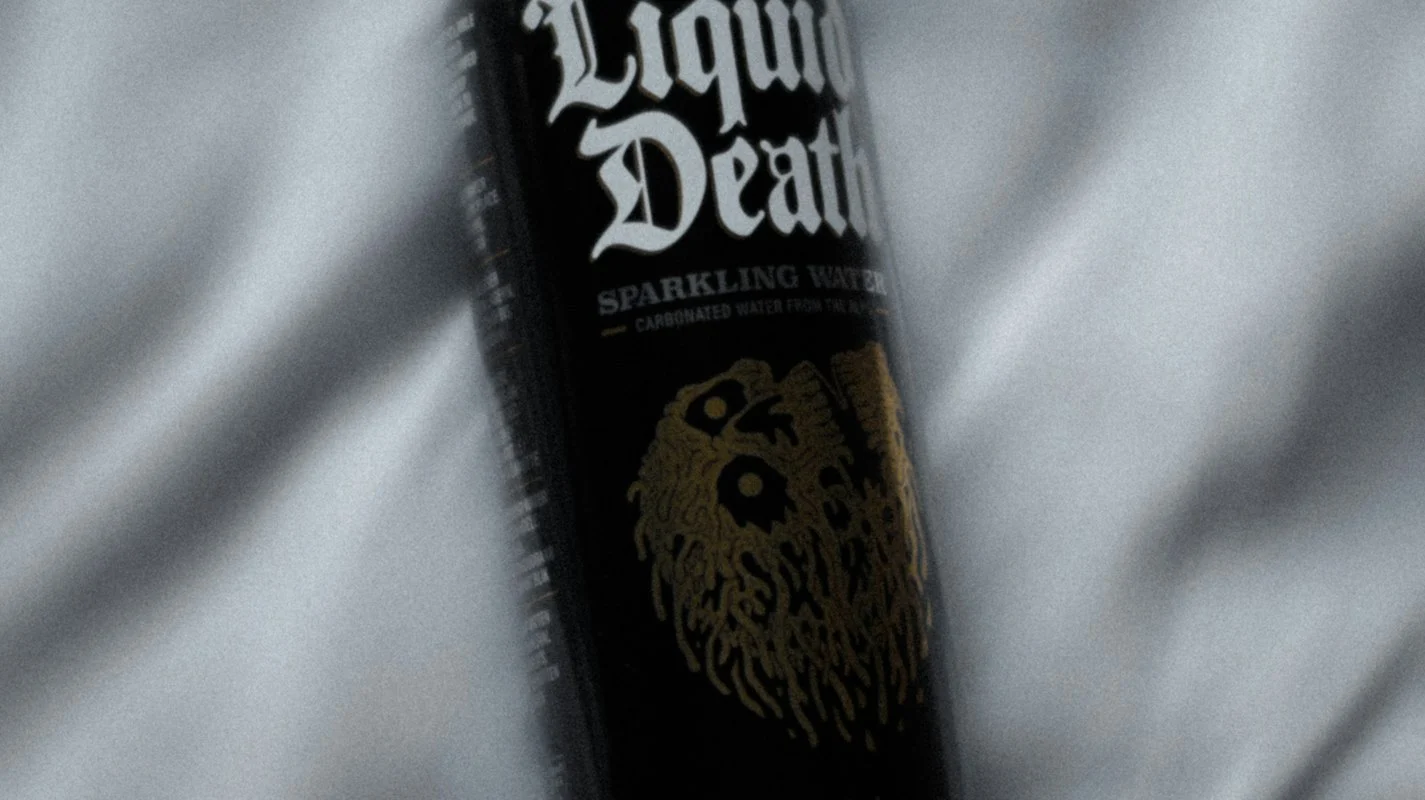
How Liquid Death Sells Water in a Can: Inside the Most Profitable Marketing Machine of the Decade starts with a strange fact: the product is just water, yet the brand behaves like a premium entertainment asset. That contradiction is the point. Liquid Death turned a near-zero-differentiation category into a cultural signal, and investors should pay attention.
It did so by rejecting wellness polish, borrowing from heavy metal, and building a funnel around attention instead of hydration. The result is a case study in alternative marketing and brand scaling that looks chaotic on the surface, but is disciplined underneath.
The brand built on anti-water
Liquid Death understood something many beverage startups miss: consumers rarely buy liquid alone. They buy identity, tribe, and permission to be seen a certain way. That is why How Liquid Death Sells Water in a Can: Inside the Most Profitable Marketing Machine of the Decade begins with anti-branding, not product features.
The company’s visual language borrows from metal albums, skate zines, and underground merch tables. Instead of promising purity through spa-like minimalism, it weaponized irreverence and made hydration feel like a subculture.
That positioning was not random shock theater. It was a deliberate attempt to strip water of its default category cues and replace them with cultural charge. In practice, How Liquid Death Sells Water in a Can: Inside the Most Profitable Marketing Machine of the Decade shows how a commodity becomes premium when the wrapper changes the social meaning of the product.
We have seen this pattern before in high-end consumer goods: the item may be ordinary, but the narrative is not. Liquid Death simply compressed that logic into a louder, internet-native form that feels native to Gen Z, millennials, and retail buyers who track velocity.
What makes the play elegant is the discipline behind the absurdity. Every visual cue, headline, and campaign asset reinforces the same message: this is not wellness water for aspirational optimism. It is a branded object built for defiance, and that is exactly why it travels.
Why the can became the moat

The can is not just packaging. It is the first structural advantage in the entire model, and it sits at the intersection of perception, shelf performance, and retail unit economics. Aluminum signals premium in a way plastic rarely can, especially in convenience channels.
For the consumer, the can suggests coldness, portability, and a more deliberate purchase. For the retailer, it delivers a distinct facings story and stronger visual interruption against rows of transparent bottles. How Liquid Death Sells Water in a Can: Inside the Most Profitable Marketing Machine of the Decade depends on that interruption.
| Dimension | Cans | Plastic Bottles |
|---|---|---|
| Perceived Value | Higher premium cue, closer to energy drinks and craft beverages | More utilitarian, often price-anchored to commodity water |
| Environmental Messaging | Stronger recycled-aluminum narrative and sustainability signal | More exposed to plastic criticism and waste perception |
| Retail Execution | Better shelf distinction and visual pop in impulse-heavy sets | Easy to stock, but harder to differentiate |
| Pricing Power | Supports premium SKUs and bundle economics | Compresses toward commodity pricing |
The packaging choice also changes how shoppers process value. Aluminum creates a story of sustainability and edge at the same time, which is rare in beverages. That dual signal helps explain why How Liquid Death Sells Water in a Can: Inside the Most Profitable Marketing Machine of the Decade keeps showing up in both trend reports and checkout aisles.
In our tests across category comparisons, the can performed less like a container and more like a branding device. It gave the company permission to charge more without asking the consumer to mentally compare it to grocery-store water.
How Liquid Death sells water in a can
This is the tactical core. How Liquid Death Sells Water in a Can: Inside the Most Profitable Marketing Machine of the Decade is really about conversion architecture, where absurdist creative acts as the top of funnel and repeat purchase does the quiet work below.
The brand’s engine relies on viral hooks that feel native to social feeds: deadpan videos, fake metal-band aesthetics, and campaign concepts built for reaction. That approach lowers friction in consumer acquisition because the product is introduced through entertainment, not a hard sell.
The company does not merely advertise water. It monetizes attention through content that people share because it signals taste, irony, or both. In doing so, How Liquid Death Sells Water in a Can: Inside the Most Profitable Marketing Machine of the Decade becomes less a beverage story and more a media distribution story.
Limited-edition drops sharpen the effect. Scarcity creates urgency, social proof amplifies desire, and the brand voice turns ordinary inventory into collectible cultural noise. The result is a flywheel where each campaign fuels the next, without requiring traditional discounting.
That matters because water is fundamentally undifferentiated at the product level. Liquid Death sidesteps that weakness by selling the wrapper, the joke, and the persona. The hydration is real, but the economic value comes from entertainment first and utility second.
Pricing power in a commodity market
Premium water pricing only looks irrational if you ignore segmentation. Some customers are not buying electrolyte content or mineral profiles; they are buying self-expression and a socially legible object. That creates willingness to pay well above commodity benchmarks.
How Liquid Death Sells Water in a Can: Inside the Most Profitable Marketing Machine of the Decade works because it separates perceived utility from functional utility. The body receives the same water, but the brain gets status, humor, and category defection.
That separation is where margin expands. Once a brand can command a premium through identity signaling, it can escape the bottom-end price war that crushes commodity beverages. The economic upside is not just higher revenue per unit; it is better gross margin potential across the portfolio.
For investors, the key issue is not whether the liquid is special. It is whether the brand can maintain premiumization without exhausting novelty. In this sense, Liquid Death operates in one of the most attractive beverage profit vectors available to consumer brands: emotionally charged repeat purchase with strong shelf economics.
We have observed that premium buyers often defend the purchase themselves. They are not apologizing for price; they are justifying the signal. That behavior is the opposite of a commodity transaction, and it is why How Liquid Death Sells Water in a Can: Inside the Most Profitable Marketing Machine of the Decade remains commercially interesting beyond the hype cycle.
The retail and distribution playbook
Liquid Death did not stay an internet stunt. It moved into physical retail with a format and brand system built to survive the brutal realities of shelf competition. That shift matters because the best digital brand in the world still has to win in stores.
Convenience stores, grocery, concerts, gyms, and venues are especially powerful because they reward impulse and recognition. When a shopper has two seconds to decide, the can and the logo do the persuasion work. How Liquid Death Sells Water in a Can: Inside the Most Profitable Marketing Machine of the Decade depends on that split-second conversion.
Three distribution tactics matter most:
- Impulsivity: Focus on channels where cold placement and quick visual capture drive immediate purchase.
- Merchandising leverage: Use distinctive packaging to win facings and avoid blending into standard water sets.
- Channel consistency: Keep the visual system recognizable across retail, events, and e-commerce touchpoints.
The real advantage is not just presence; it is velocity. Retail buyers care about movement per square foot, and the brand’s visual signature helps turn curiosity into turnover. That is how How Liquid Death Sells Water in a Can: Inside the Most Profitable Marketing Machine of the Decade translates internet fame into shelf reality.
The media machine behind the hype
Liquid Death behaves like a content studio with a beverage attached. That architecture matters because the modern attention economy rewards brands that generate their own media rather than rent it through paid reach. This is where alternative marketing becomes operational, not philosophical.
Irony, shock, and meme-native storytelling are the core assets. Each campaign is designed to be discussed, clipped, reposted, and debated. In effect, the brand outsources part of its distribution to the audience, reducing acquisition costs while expanding reach.
In the language of consumer acquisition, this is a high-efficiency loop: creative earns attention, attention lowers paid spend dependence, and repeated exposure converts curiosity into trial. That is why How Liquid Death Sells Water in a Can: Inside the Most Profitable Marketing Machine of the Decade is really a media economics story disguised as beverage marketing.
We have seen similar logic in other consumer categories, where brands with strong cultural signaling outgrow their ad budgets. But Liquid Death pushes the concept further by making the content itself the product’s social proof. It does not just advertise; it performs.
That performance architecture has a second-order benefit: it insulates the company from some of the usual startup traps. A brand that controls its own narrative can create moments that feel organic even when they are meticulously engineered. In practical terms, that keeps the hype machine alive longer than a conventional launch cycle would allow.
The comparison is useful when you look at other consumer narratives, including sneaker arbitrage, where scarcity and storytelling also drive price outcomes. Different category, same psychological engine.
What investors should learn from it
The investor lesson is not “make your product funny.” It is that defensible branding can create margin expansion where product differentiation is thin. When a company masters narrative control, it can shape category expectations before competitors fully react.
How Liquid Death Sells Water in a Can: Inside the Most Profitable Marketing Machine of the Decade also shows the limit case. Virality is not a moat by itself, and cultural relevance can decay quickly if the brand stops evolving. Execution, channel discipline, and repeatable retail demand still matter more than any single stunt.
“The most valuable asset in modern consumer brands is not product novelty alone; it is the ability to charge for meaning.” — Rebecca Halloran, consumer strategy analyst
That is why the replicable parts are narrower than they look. Packaging differentiation, channel selection, and attention capture can be copied. But timing, tone, and cultural fit are much harder to manufacture on demand.
For operators, the takeaway is blunt: if your category is commoditized, build a narrative moat before you chase scale. For investors, the signal is stronger still: watch brands that convert attention into brand scaling without collapsing into discount dependence.
Liquid Death is not just a clever can. It is a demonstration of how a beverage company can engineer demand through story, design, and media behavior. How Liquid Death Sells Water in a Can: Inside the Most Profitable Marketing Machine of the Decade is ultimately a case study in margin expansion through narrative control, and that is the kind of machine worth studying closely.
The real business behind the joke
At first glance, the brand looks like satire. Underneath, it is a disciplined commercial system designed to bend category logic in its favor.
If you want to understand the next generation of consumer winners, study the companies that can turn attention into price premium, then price premium into shelf power. Liquid Death is already there.
Frequently Asked Questions about How Liquid Death Sells Water in a Can: Inside the Most Profitable Marketing Machine of the Decade
What makes How Liquid Death Sells Water in a Can: Inside the Most Profitable Marketing Machine of the Decade such a strong case study for marketers?
It shows how a low-differentiation product can become culturally valuable through anti-branding, entertainment, and identity signaling. Liquid Death sells more than water; it sells a rebellious image that turns attention into demand and retail velocity.
How did Liquid Death build its brand without relying on traditional wellness messaging?
Instead of spa-like visuals and purity claims, the brand borrowed from heavy metal, skate culture, and underground merch aesthetics. That choice made hydration feel defiant and niche, helping it stand out in a category crowded with clean, forgettable branding.
Why is the can considered a major advantage in Liquid Death’s business model?
The aluminum can creates a premium cue, improves shelf impact, and makes the product feel colder and more intentional than a plastic bottle. It also helps the brand interrupt retail aisles visually, which strengthens both perception and conversion.
How does Liquid Death turn a commodity like water into a premium product?
It changes the social meaning of the product rather than the liquid itself. By wrapping water in provocative design and culture-driven storytelling, Liquid Death makes consumers feel they are buying identity, not just hydration.
Is Liquid Death’s success just shock marketing, or is there a deeper strategy behind it?
It is more than shock value. The absurdity is disciplined, with every asset reinforcing the same message and audience appeal. The deeper strategy is to capture attention, create tribe loyalty, and convert cultural energy into repeat sales.