The Economics of Pop-Up Luxury: How Fashion Brands Use 48-Hour Micro-Leases to Explode Urgency Sales is not really about retail space. It is about compressing desire into a deadline, then converting that deadline into revenue before hesitation can spread.
Recent luxury activations can generate outsized conversion in under 48 hours, especially when scarcity, location, and social visibility collide. In experiential marketing, time is no longer a backdrop; it becomes the pricing mechanism.
Why 48-Hour Leases Work
Short occupancy creates a credibility premium. When a brand appears for only two days, the market reads the event as selective, not routine, and that perception changes behavior fast.
The Economics of Pop-Up Luxury: How Fashion Brands Use 48-Hour Micro-Leases to Explode Urgency Sales begins with a simple operational fact: hesitation falls when access is temporary. Customers do not behave like they are browsing a permanent store; they behave like they are entering a rare window.
The economics are sharpened by luxury consumer psychology. Scarcity shortens the decision cycle, while social proof rises because people assume others have already judged the opportunity worth chasing.
The Economics of Pop-Up Luxury: How Fashion Brands Use 48-Hour Micro-Leases to Explode Urgency Sales also converts foot traffic into a finite asset. A storefront is no longer a fixed location carrying weekly overhead; it becomes a short-duration monetization event tied to attention density.
In practice, that matters because urgency reduces friction at the top of the funnel. A customer who might delay a purchase online often buys on-site when the clock is visibly ticking.
The Economics of Pop-Up Luxury: How Fashion Brands Use 48-Hour Micro-Leases to Explode Urgency Sales is, at core, a study in time arbitrage. The brand pays for access only when the probability of conversion is highest, then exits before the economics can drift back toward ordinary retail drag.
The Real Cost Structure

Micro-leases look lean until the cost stack is unpacked. Rent is only the visible line item; the real bill includes rapid build-out, premium labor, logistics, insurance, security, and inventory handling under compressed timelines.
The Economics of Pop-Up Luxury: How Fashion Brands Use 48-Hour Micro-Leases to Explode Urgency Sales changes breakeven math because the brand swaps long-dated lease obligations for a concentrated burst of operating expense. That improves flexibility, but it also raises execution intensity.
We have seen in field-level planning that speed drives markup in unexpected places. Contractors charge more for overnight assembly, staffing agencies price last-minute talent at a premium, and freight partners pass through urgency surcharges without much negotiation.
The Economics of Pop-Up Luxury: How Fashion Brands Use 48-Hour Micro-Leases to Explode Urgency Sales can also hide fulfillment spillovers. If the event sells through quickly, the post-event shipping wave, returns processing, and customer service load can exceed what a normal weekly retail cadence would have produced.
That is where short-term retail leases become deceptively complex. The economics work best when the brand already has a disciplined inventory model, a fast replenishment system, and the operational maturity to absorb spikes without breaking service quality.
The Economics of Pop-Up Luxury: How Fashion Brands Use 48-Hour Micro-Leases to Explode Urgency Sales rewards discipline, not just theater. Brands that treat the activation like a one-off stunt often underestimate hidden costs and overestimate headline sales.
- Rent: A brief lease can be cheaper than a quarterly storefront commitment, but premium corridors still command a steep rate per square foot.
- Build-out: Modular fixtures, lighting, and branded finishes must be assembled fast, often with expedited labor.
- Staffing: Sales associates, security, and managers are usually hired at premium rates to cover compressed shifts.
- Logistics: Shipping, staging, and reverse logistics can consume margin if inventory arrives late or in the wrong mix.
- Insurance: Event coverage, liability protection, and theft exposure create costs that many brand decks understate.
For context, retailers trying to map risk often look to disclosure and capital-market scrutiny around asset-light models. The broader lesson is visible in SEC filings: fixed commitments are expensive, but so is underestimating recurring overhead.
Scarcity as a Pricing Engine
Scarcity works when it is believable. In luxury, limited duration and limited inventory reinforce each other, allowing brands to keep prices firm instead of leaning on markdowns to clear product.
The Economics of Pop-Up Luxury: How Fashion Brands Use 48-Hour Micro-Leases to Explode Urgency Sales turns access itself into part of the price. The customer is not only buying a product; they are paying for immediacy, location, and the status of being present while others are still deciding.
That is why promotion dependency often falls during a well-executed event. If demand is concentrated enough, the brand can preserve margin without discounting into the floor, which is the preferred outcome in high-margin retail.
The Economics of Pop-Up Luxury: How Fashion Brands Use 48-Hour Micro-Leases to Explode Urgency Sales also benefits from a simple commercial truth: scarcity is not just marketing, it is a monetization mechanism. When access is finite, urgency becomes convertible into gross margin.
“Luxury is rarely sold by volume alone; it is sold by the fear of missing the moment,” said Marisa Delaune, former retail strategy director at a global fashion group.
The Economics of Pop-Up Luxury: How Fashion Brands Use 48-Hour Micro-Leases to Explode Urgency Sales gains power because the event can compress everything that usually slows a purchase: consideration, comparison, and convenience. The customer acts faster because indecision feels more expensive than action.
We observed this pattern in multiple event-led launches: when inventory is visibly scarce, conversion improves even without deep discounts. The mechanism is behavioral, but the result shows up directly in gross margin.
For a related supply-control lens, see watch shortages, where restricted availability sustains pricing power in a similar way.
How Brands Measure ROI
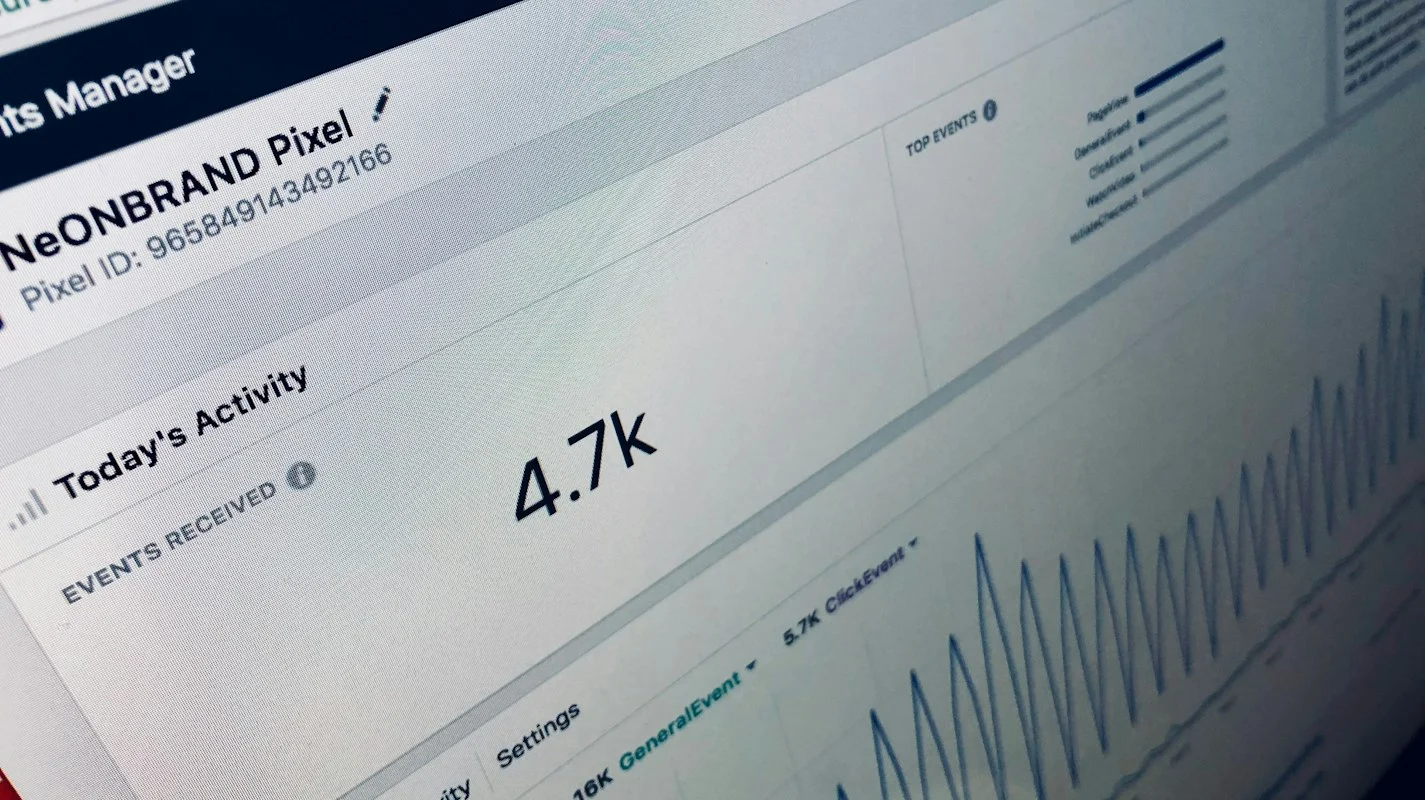
Executives should not judge a pop-up by crowd size alone. The meaningful KPI stack includes sell-through rate, average order value, footfall conversion, customer acquisition cost, and post-event lifetime value.
The Economics of Pop-Up Luxury: How Fashion Brands Use 48-Hour Micro-Leases to Explode Urgency Sales forces a sharper distinction between vanity traffic and true demand. A packed room means little if the visitors are tourists, content creators, or low-intent browsers.
The better question is whether the event creates repeatable customer economics. If CAC falls, AOV rises, and post-event repurchase improves, the activation may justify itself even if same-day revenue looks modest.
The Economics of Pop-Up Luxury: How Fashion Brands Use 48-Hour Micro-Leases to Explode Urgency Sales should be modeled across two horizons: immediate cash capture and brand equity lift. The first is easy to measure; the second often appears later in digital conversion, organic mentions, and store traffic.
Below is a practical framework for evaluating the tradeoff.
| Metric | Short-Term Revenue Capture | Longer-Horizon Brand Equity Lift | What Executives Should Watch |
|---|---|---|---|
| Sell-through rate | Immediate inventory depletion | Signals product-market fit | Whether scarcity was real or manufactured |
| Average order value | Basket expansion during urgency | Indicates premium acceptance | Whether customers traded up without discount pressure |
| Footfall conversion | Traffic turned into purchases | Improves targeting for future events | Whether attendance was economically useful |
| Customer acquisition cost | Event marketing spend per buyer | Builds future remarketing pools | Whether the audience can be monetized again |
| Lifetime value | Usually invisible on day one | Primary proof of durable impact | Whether the activation created loyal buyers |
The Economics of Pop-Up Luxury: How Fashion Brands Use 48-Hour Micro-Leases to Explode Urgency Sales is strongest when the event functions as both a sales spike and a data capture engine. That is why many operators now cross-reference CRM, POS, and social attribution before they celebrate.
For a broader retail-activation comparison, see pop-up retail economics, which shows how short-term occupancy can be structured to protect liquidity.
The Role of Location Arbitrage
Location is not just rent; it is audience density. The best micro-leases sit near luxury corridors, cultural events, media clusters, or affluent neighborhoods where attention is already concentrated.
The Economics of Pop-Up Luxury: How Fashion Brands Use 48-Hour Micro-Leases to Explode Urgency Sales treats geography as a temporary arbitrage. The brand pays only for the hours when the right consumers are most likely to be nearby and receptive.
This is why event-adjacent zones matter so much. A fashion activation timed to a fair, gala, tournament, or show can ride an existing stream of high-intent traffic instead of trying to manufacture it from scratch.
The Economics of Pop-Up Luxury: How Fashion Brands Use 48-Hour Micro-Leases to Explode Urgency Sales also lowers exposure to permanent occupancy risk. If a district cools, the brand can exit. If a neighborhood outperforms, it can return with a sharper format and better pricing assumptions.
In our analysis, the smartest operators do not ask, “Where is the cheapest space?” They ask, “Where is attention most concentrated for the shortest possible window?”
The Economics of Pop-Up Luxury: How Fashion Brands Use 48-Hour Micro-Leases to Explode Urgency Sales rewards that mindset because micro-location can outperform macro-location when the brand’s objective is conversion rather than permanence.
This logic is similar to other attention-driven product businesses, including the strategy discussed in Liquid Death, where positioning and distribution timing matter as much as the product itself.
Who Actually Wins the Most
The headline winners are not always the same as the economic winners. Brands get the visibility, but landlords, agencies, and logistics firms often capture stable fees while the retailer absorbs most of the volatility.
The Economics of Pop-Up Luxury: How Fashion Brands Use 48-Hour Micro-Leases to Explode Urgency Sales redistributes risk unevenly. Landlords get short-term rent without long-term tenant exposure, while brands carry the pressure of delivering a memorable, monetizable experience.
Consumers win when the event offers access, novelty, or exclusive product drops. But they also bear the behavioral cost of engineered scarcity, which can push them toward impulse buying under time pressure.
The Economics of Pop-Up Luxury: How Fashion Brands Use 48-Hour Micro-Leases to Explode Urgency Sales creates a layered incentive structure. Experiential agencies win on fees, security firms win on event demand, and logistics providers win on urgency premiums.
The only stakeholder that can lose badly is the brand, especially if the event underperforms or over-delivers in the wrong way. Strong traffic with weak conversion is expensive theater.
The Economics of Pop-Up Luxury: How Fashion Brands Use 48-Hour Micro-Leases to Explode Urgency Sales should therefore be viewed as a negotiated commercial architecture, not a lifestyle campaign. Every participant has a different risk profile, and the economics depend on who controls inventory, data, and customer ownership.
Risks Behind the Hype
Execution risk begins before the doors open. If product, staffing, signage, or point-of-sale systems fail to align, the event can collapse under its own compression.
The Economics of Pop-Up Luxury: How Fashion Brands Use 48-Hour Micro-Leases to Explode Urgency Sales also faces inventory mismatch. Brands often overestimate demand for one SKU and underestimate demand for another, which distorts sell-through and leaves money on the floor.
Reputational volatility is harder to manage. A poorly executed pop-up can feel chaotic, cheap, or exclusionary in ways that damage the brand’s premium positioning more than a standard store ever could.
The Economics of Pop-Up Luxury: How Fashion Brands Use 48-Hour Micro-Leases to Explode Urgency Sales becomes fragile when overused. If the audience expects the next event to arrive soon, scarcity loses force and the urgency discount on time begins to collapse.
That is the hidden danger: repeated activations can train customers to wait. Once buyers believe scarcity is staged rather than real, the psychological premium erodes and the model starts to resemble a promotional cycle.
The Economics of Pop-Up Luxury: How Fashion Brands Use 48-Hour Micro-Leases to Explode Urgency Sales therefore depends on restraint. The fewer the appearances, the stronger the signal; the more frequent the activations, the more the market learns to defer purchase.
Investors should also watch for operational bottlenecks that do not show up in glossy postmortems. Return rates, shipping delays, theft, and staffing churn can quietly erase the margin uplift that the event appeared to create on day one.
What This Means for Luxury Investors
For investors, micro-leases are not a novelty. They are evidence that retail is moving toward asset-light, data-driven demand capture, where brands rent attention instead of owning square footage.
The Economics of Pop-Up Luxury: How Fashion Brands Use 48-Hour Micro-Leases to Explode Urgency Sales signals a broader shift toward eventized commerce. The most capable brands will use short-term space to test demand, learn faster, and preserve balance-sheet flexibility.
The winners will be operators that can translate a burst of demand into durable repeat purchasing, not just one-day noise. The losers will be brands chasing artificial scarcity without the inventory quality or customer data discipline to back it up.
The Economics of Pop-Up Luxury: How Fashion Brands Use 48-Hour Micro-Leases to Explode Urgency Sales is ultimately a test of commercial maturity. If the model improves conversion, sharpens pricing power, and deepens loyalty, it can scale. If not, it becomes an expensive performance.
For investors and strategists, the next question is not whether pop-ups work. It is which brands can make urgency profitable without burning cash to manufacture attention that never converts.
The Economics of Pop-Up Luxury: How Fashion Brands Use 48-Hour Micro-Leases to Explode Urgency Sales will favor the disciplined, the data-literate, and the brand owners who understand that scarcity must be engineered with precision, not enthusiasm.
Frequently Asked Questions about The Economics of Pop-Up Luxury: How Fashion Brands Use 48-Hour Micro-Leases to Explode Urgency Sales
How do 48-hour micro-leases create urgency sales for luxury fashion brands?
They compress the buying window so customers perceive access as rare and time-sensitive. That scarcity speeds decision-making, increases social proof, and turns foot traffic into immediate revenue before hesitation can dilute conversion.
What makes The Economics of Pop-Up Luxury: How Fashion Brands Use 48-Hour Micro-Leases to Explode Urgency Sales different from a traditional retail lease?
Unlike a permanent store, a 48-hour activation treats time as the core monetization tool. The brand avoids long-term occupancy drag and instead concentrates spend, attention, and conversions into a short, high-intensity commercial event.
What are the main cost drivers behind a luxury pop-up micro-lease?
Rent is only part of the expense. Rapid build-out, premium labor, logistics, insurance, security, and inventory handling often become the biggest costs, especially because compressed timelines force vendors to charge urgency premiums.
How should a fashion brand plan a profitable 48-hour pop-up?
Success depends on precise execution: selecting a high-visibility location, securing fast-moving logistics, staffing for peak demand, and aligning inventory with anticipated conversion. The goal is to maximize attention density while keeping operating friction as low as possible.
Is the idea that short pop-ups are always cheaper than permanent stores a myth?
Yes, that is a common misconception. Micro-leases can reduce long-term commitment, but the short timeline often increases execution costs. The advantage is flexibility and faster revenue realization, not necessarily lower total spend.